
Root Canal Treatment
Root Canal Treatment: A Comprehensive Guide to Saving Your Tooth and Avoiding Pain
Dr. Safaa Ellathy
Root Canal Treatment
The term “root canal treatment” or “nerve treatment” is one of the phrases that causes the most anxiety and stress for many people. The stereotype associated with this procedure is often painful and frightening. But in reality, with the remarkable developments in modern dentistry, root canal treatment has become a safe, effective, and completely painless procedure. It is the only solution to save a damaged tooth from extraction and restore it to its natural function. In this comprehensive article, we will delve into all the details of this vital procedure, from its symptoms and causes to the latest techniques used and the steps of the treatment, to remove all the mystery and fears surrounding it.
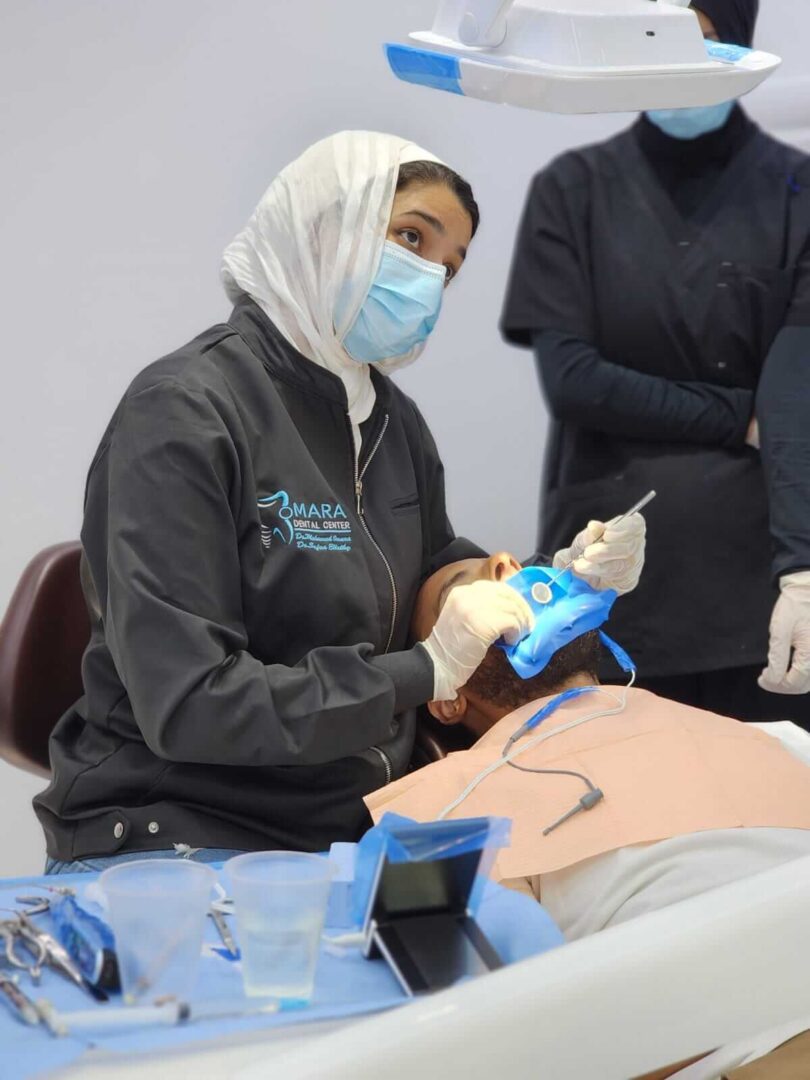
1. What is Root Canal Treatment and What is its Importance?
Dental root canal treatment, also known medically as Endodontics, is a medical procedure aimed at removing infected or inflamed tissue from inside the tooth, specifically from an area known as the “pulp.” The dental pulp consists of nerves, blood vessels, and connective tissue that nourish the tooth and maintain its vitality. When this pulp becomes infected or damaged due to deep decay, a fracture, or injury, it begins to decompose, causing severe pain and potentially leading to an abscess or serious complications.
This is where the importance of root canal treatment comes in. It is not just a painkiller; it is a real tooth-saving operation. Instead of completely extracting the tooth and losing its function, this treatment allows for the removal of the primary source of the problem (the infection), the cleaning of the internal canals, and then their complete filling and sealing. In this way, the tooth is preserved in its place, which protects the jaw from any changes that might occur due to the empty space, and maintains the smile and chewing function naturally.
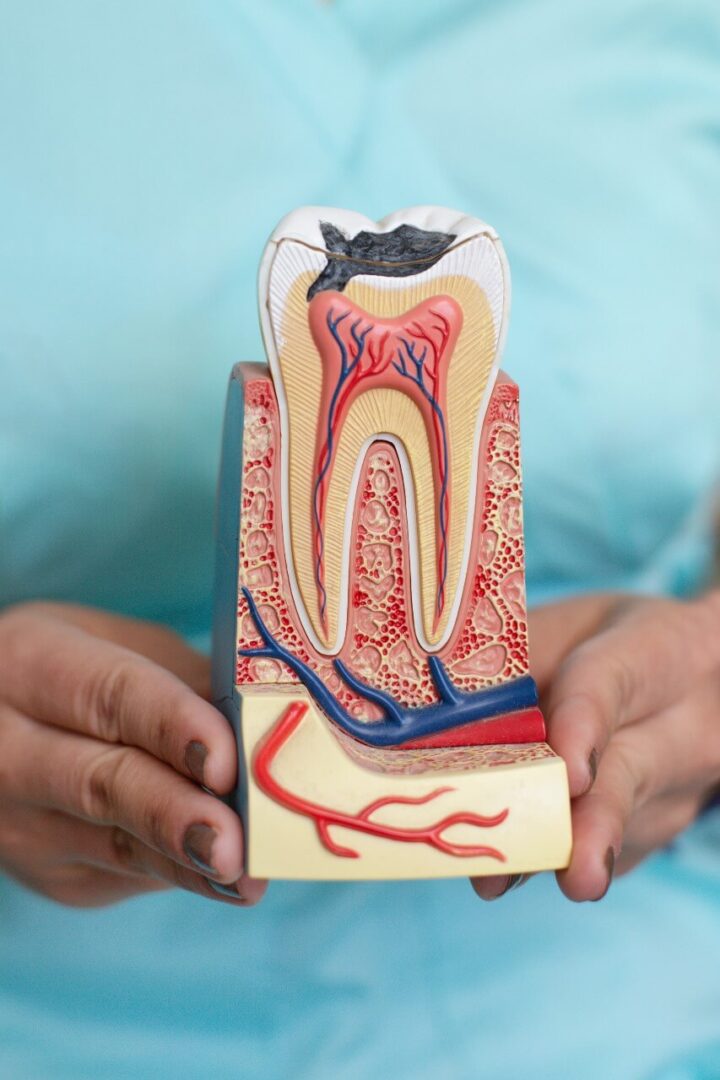
2. When Do You Need Root Canal Treatment? (Symptoms and Warning Signs)
Not every toothache requires root canal treatment, but there are a number of symptoms that are strong warning signs that the dental pulp may be infected, and they require an immediate visit to the dentist:
Severe and persistent pain: This is the most common symptom. The pain is throbbing, does not stop, and may increase when lying down or when pressure is applied to the tooth.
Severe sensitivity to hot and cold: If the pain continues after the source of the heat or cold (such as drinking a hot or cold beverage) is removed for a long time, this may be an indicator of pulp inflammation.
Swelling of the gums and face: Swelling and redness may appear in the gums surrounding the affected tooth, and in some cases, the swelling may extend to the face and neck.
The appearance of pimples or an abscess on the gums: The appearance of a small pimple-like bump on the gums near the affected tooth indicates the presence of an abscess or a drainage channel for the infection.
Tooth discoloration: The affected tooth may turn dark or gray due to the death of the internal tissues.
Pain when chewing or touching: Feeling a sharp pain when pressing on the tooth or using it for chewing.
Tooth mobility: In advanced cases, the tooth may begin to loosen due to inflammation of the surrounding bone.
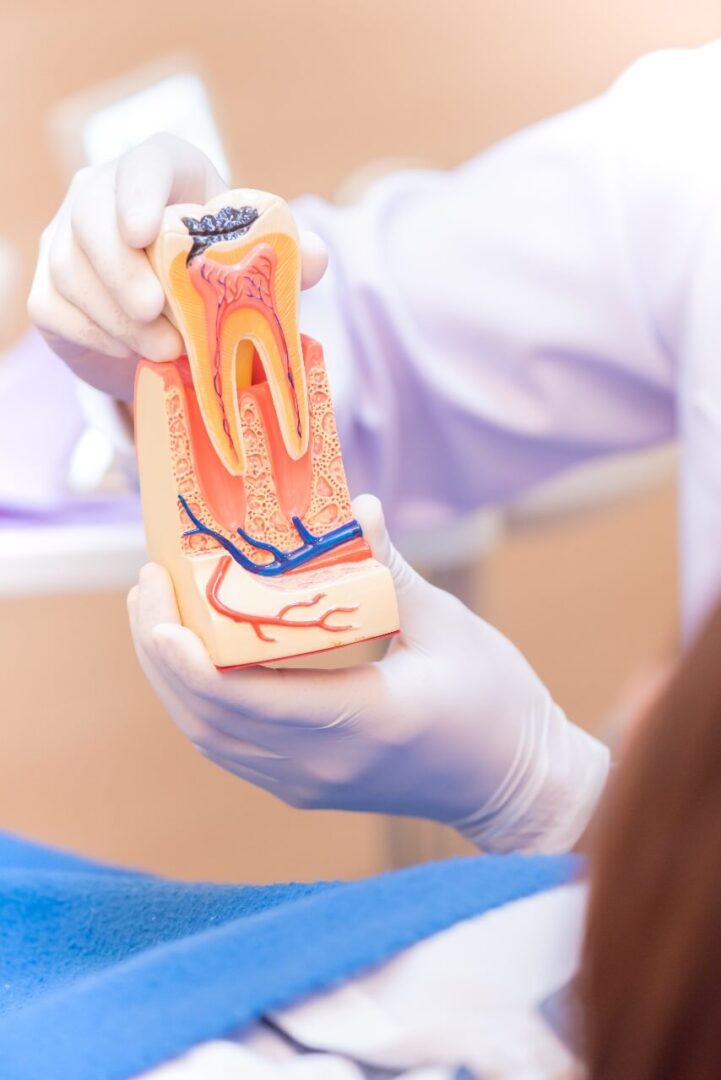
3. What are the Main Causes of Dental Pulp Inflammation? (Why Does Your Tooth's Nerve Become Infected?)
To understand why your tooth might need root canal treatment, it is important to know the reasons that lead to the inflammation or erosion of the dental pulp, which is the vital tissue located in the center of the tooth. This inflammation often occurs as a result of a breach in the tooth’s natural protective barrier (the enamel and dentin layers).
Deep, untreated decay: Decay is the first and most common cause of pulp inflammation. If decay is not treated in its early stages, it gradually penetrates through the hard layers of the tooth until it eventually reaches the dental pulp, which allows bacteria to invade and multiply inside the pulp, causing severe inflammation and sharp pain.
Trauma or tooth fracture: Severe trauma to the mouth, such as a fall or a sports accident, can lead to a fracture or crack in the tooth that may reach the dental pulp, making it susceptible to bacteria and infection.
Large or repeated fillings: Old or cracked fillings can allow bacteria to leak into the dental pulp over time, causing inflammation.
Severe tooth erosion or grinding (Bruxism): Excessive teeth grinding at night or severe tooth erosion due to eating or drinking habits can lead to the exposure of the dentin layer, making the tooth more sensitive and susceptible to pulp inflammation in the long term.
Advanced gum disease: In some rare and advanced cases of gum disease, the infection can spread from the gums to the root canals through small channels at the end of the tooth, causing inflammation in the dental pulp from the bottom part.
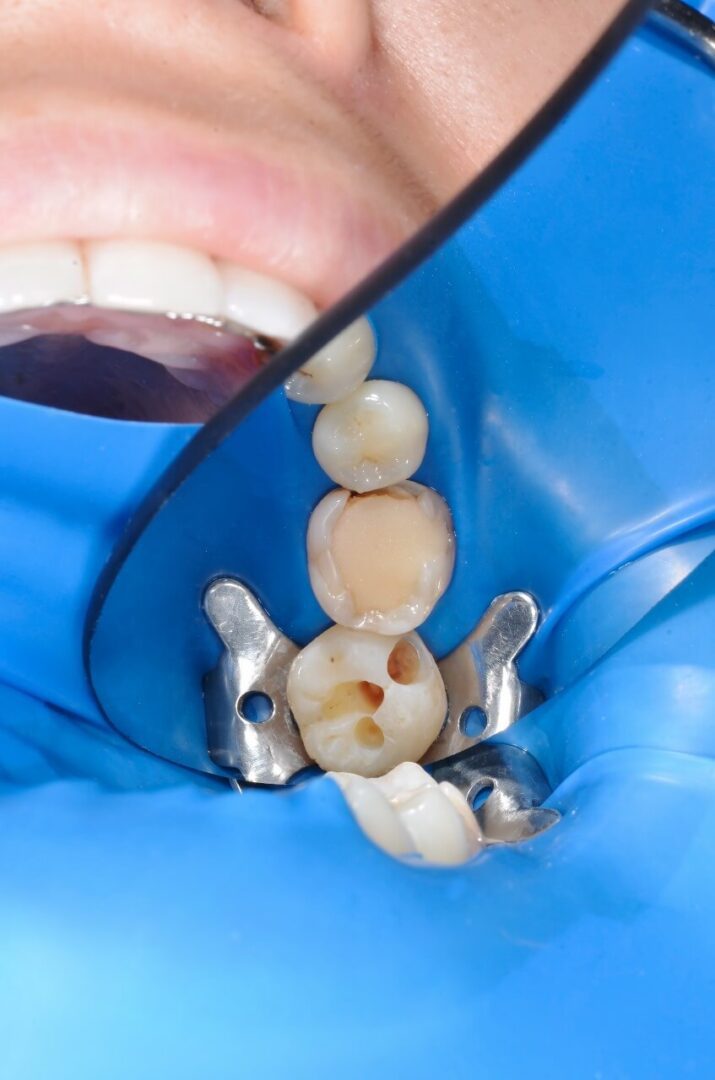
4. Steps of Root Canal Treatment: A Journey to Save Your Tooth at Dr. Mohamed Omara's Center
The dental root canal treatment journey is a precise and systematic process that ensures the best results. At Dr. Mohamed Omara’s Center, this procedure is performed using the latest techniques to ensure patient comfort and procedural accuracy. Here are the main steps that are followed:
Accurate diagnosis and treatment planning: The journey begins with a comprehensive examination of the affected tooth using digital X-rays to determine the extent of the inflammation or infection in the pulp and roots, and to accurately plan the course of treatment in advance.
Comfortable local anesthesia: Before any step, local anesthesia is applied effectively and safely to the area around the tooth, ensuring that you will not feel any pain or discomfort during the procedure.
Tooth isolation for maximum protection: A thin rubber barrier called a “Dental Rubber Dam” is placed around the tooth. This barrier isolates the tooth from the rest of the mouth, which prevents bacteria from saliva from reaching the treatment area, and protects the patient from swallowing any small materials or tools used during the procedure.
Access to the infected pulp: The doctor makes a very small opening in the tooth’s crown to access the pulp chamber and the root canals. This opening is the gateway that allows access to the infected tissues and the root canals.
Cleaning and shaping the canals using the latest techniques: This is considered the most essential step in the treatment. The inflamed and diseased tissues are removed from inside the canals. At Dr. Mohamed Omara’s Center, advanced tools and devices are used to clean and shape the canals with extreme precision, which ensures the complete removal of the infection.
Complete disinfection of the canals: After mechanical cleaning, the canals are washed with special solutions for deep disinfection, which eliminates any remaining bacteria.
Filling and sealing the canals securely: Once the canals are clean and completely dry, they are filled with a sterile, flexible material called “Gutta-percha”, which seals the canals tightly and prevents the return of infection in the future.
Final restoration and reconstruction of the tooth: A crucial step for long-term protection This step is essential to prevent any bacteria from re-infiltrating the tooth after cleaning the canals and placing the root canal filling. In most cases, a permanent filling is placed directly on the tooth in the same session, to ensure a tight seal that prevents any leakage that might occur with temporary fillings. As for the step of placing the crown, an appointment is set for a later session.
The crown is considered the strongest protective shield for the treated tooth, especially for molars and back teeth that are exposed to chewing pressures. However, recent studies in root canal treatment indicate that some cases may not need a crown if the remaining tooth structure is strong and sufficient, especially in some front teeth.
5. Modern Techniques in Root Canal Treatment (The Difference Between Old and New)
Modern root canal techniques have witnessed tremendous developments, which have made the procedure more accurate, faster, and more effective:
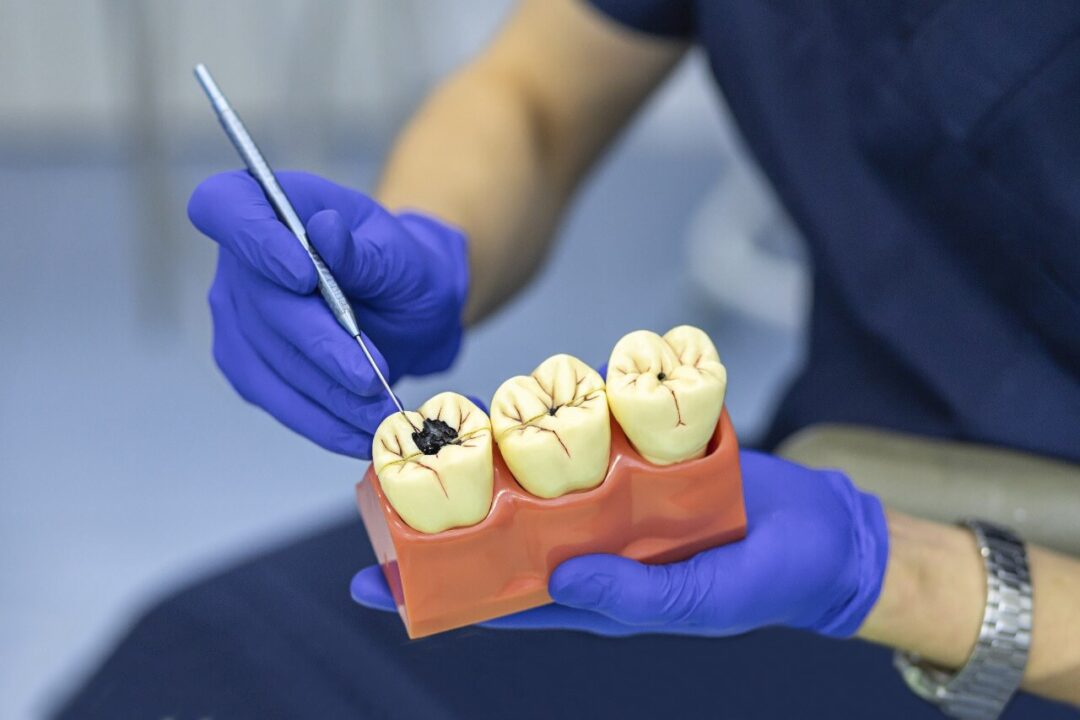
The use of a surgical microscope (Dental Microscope): This microscope allows the dentist to see the root canals in a highly magnified and clear way, which enables them to deal with difficult cases, such as very narrow or curved canals, and ensures their complete cleaning.
Advanced devices for cleaning the canals: Modern tools such as “Nickel-Titanium” devices, which are distinguished by their flexibility and ability to clean the canals more efficiently and accurately.
3D digital imaging technology (3D CBCT): It provides detailed images of the roots and canals, which helps the dentist to accurately identify any problem before starting the procedure.
6. Is Root Canal Treatment Painful? (Correcting Common Misconceptions)
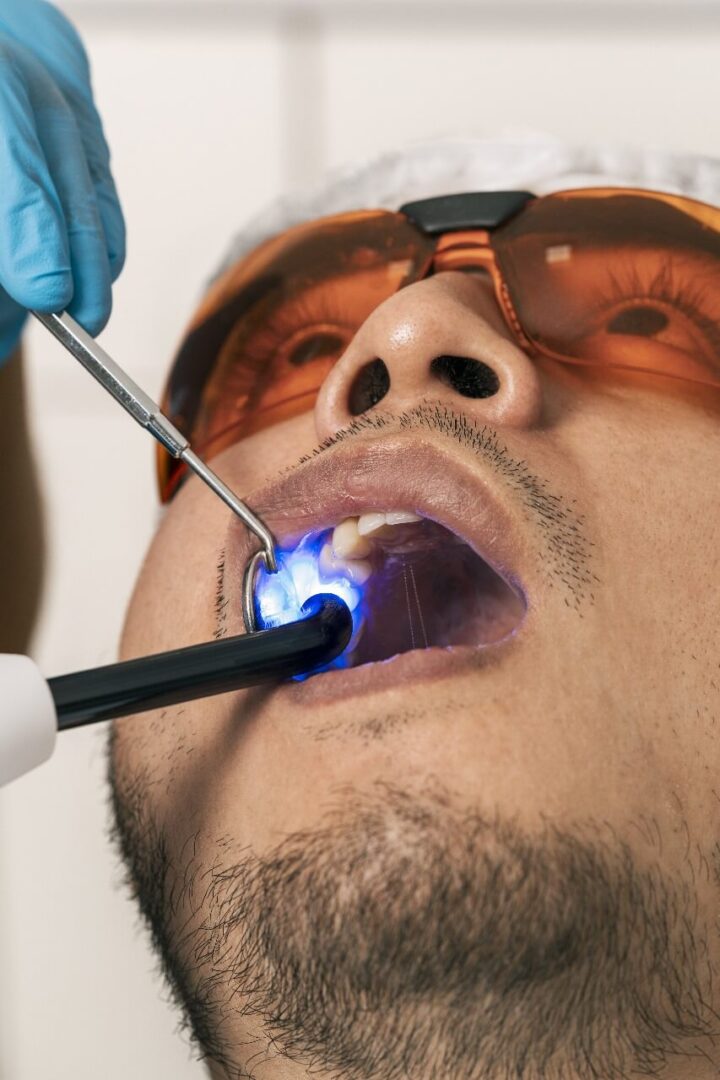
The short answer is: No. The pain that the patient feels is often before the treatment due to the acute inflammation. During the procedure, effective local anesthesia is used to ensure the patient does not feel any pain. After the treatment, the patient may feel some mild sensitivity that can be controlled with simple painkillers, which is an indication that the healing process has begun. In fact, root canal treatment represents the end of the pain, not its beginning.
7. Why Dr. Mohamed Omara's Center? Global Expertise and Personal Attention
The success of dental root canal treatment does not only depend on the technique used, but also fundamentally on the experience and competence of the dentist and the center you choose. Choosing a specialist in root canal treatment ensures you get accuracy and experience, and this is what distinguishes Dr. Mohamed Omara’s Center, which is considered the best center for root canal treatment in Egypt, as it offers a unique treatment experience that sets it apart.
1. Global Academic Expertise: A Certificate from the Heart of Europe
Dr. Mohamed Omara has extensive academic and practical experience, as he holds a Master’s degree in Orthodontics and Cosmetic Dentistry from the University of Parma, Italy. This certificate from one of the most prestigious European universities is not just a title; it is an affirmation of his continuous knowledge of the latest global research and techniques, and his ability to apply the highest European standards in his clinic in Egypt.
2. Personal Supervision: Unparalleled Attention to Every Case
One of the most important features that the center is proud of is that Dr. Mohamed Omara personally supervises all cases. This means that every patient receives direct attention, an accurate evaluation, and continuous follow-up by the specialist. This personal attention ensures that the treatment plan is specifically designed to meet the individual needs of the patient, and gives the patient a sense of security and confidence throughout the treatment journey.
3. Technology and Quality: Accuracy That Does Not Accept Mistakes
The center believes that technology is the key to accuracy and success. Therefore, Dr. Mohamed Omara’s clinic is equipped with the latest devices and techniques that ensure the best results. Furthermore, the centers’ commitment to the highest standards is embodied in their receipt of the ISO international quality certification, which confirms that all procedures are carried out according to the best international practices.
3D digital imaging (3D CBCT): For accurate diagnosis and comprehensive planning for every case.
Surgical microscope: To magnify the treatment area and provide a clear view of the root canals, which ensures the complete removal of the infection even in the most difficult cases.
Laser devices: For deep sterilization of the canals and reducing the possibility of the infection returning.
The latest precise tools: To clean and shape the canals efficiently and effectively.
4. European Quality at a Competitive Egyptian Cost
The center offers a quality of treatment that rivals the highest European and American standards, but at a reasonable and competitive cost. This unique combination of high quality and reasonable price makes the center an ideal choice for those looking for the best dental care without incurring exorbitant costs.

8. Important Tips After Treatment and How to Care for the Tooth to Ensure Lasting Success
The dental root canal treatment journey does not end as soon as you leave the clinic. Caring for the treated tooth after the procedure is a crucial step to ensure the long-term success of the treatment and to preserve the tooth for life. Here are the most important tips to follow:
Avoid chewing: Avoid chewing or eating on the treated side until the effect of the anesthesia wears off.
Pain control: Use over-the-counter painkillers if you feel some sensitivity.
Maintain oral hygiene: The treated tooth can be affected by decay, so maintain your oral hygiene with a toothbrush, toothpaste, and dental floss regularly.
Do not neglect periodic follow-ups: Adhere to your periodic check-up appointments with the dentist.
Avoid bad habits: Do not bite on hard objects or use your teeth to open things.
The importance of the crown: Placing a crown or a permanent filling is the most important step to protect the weak tooth from fracture.
9. Frequently Asked Questions About Root Canal Treatment (Your Guide to Satisfying Answers)
In this section, we answer the most common questions that people ask about dental root canal treatment, to dispel any fears or confusion.
Q1: How long does a root canal treatment session take? The duration varies, but it usually ranges from one hour to one and a half hours. Complicated cases may require more than one session.
Q2: What is the cost of root canal treatment? The cost depends on the number of canals in the tooth, the complexity of the case, and the techniques used.
Q3: Can pain or infection return after treatment? If the treatment is done correctly, it is rare for the infection to return. However, you should see a dentist immediately if the sharp pain returns.
Q4: Can a treated tooth get a cavity again? Yes, a treated tooth can get a cavity again, so you must maintain its cleanliness.
Q5: What is the difference between a root canal and a regular filling? A filling treats superficial decay, while a root canal treatment treats the infection that has reached the dental pulp.
Q6: What are the available alternatives to root canal treatment? The only other option is tooth extraction, which causes future problems.
Q7: How long does the tooth last after a root canal? If the tooth is well cared for and protected with a crown, it can last a lifetime.
Q8: Does a root canal weaken the tooth? Yes, which is why it is recommended to place a crown to strengthen the tooth and protect it from fracture.

10. Root Canal Treatment for Children: Protecting the Baby Teeth Smile for the Future
Many parents may be surprised when their dentist tells them that their child needs a “root canal treatment”. The common belief is that baby teeth are not worth treating because they will eventually fall out. But in reality, caring for baby teeth is not just a cosmetic matter; it is essential to ensure the proper growth of permanent teeth and to avoid future orthodontic problems.
Root canal treatment for children is a vital procedure that aims to preserve the baby tooth in its place until the permanent tooth is ready to erupt. This procedure is done in two main ways:
A. Pulpotomy:
This procedure is used when the decay has reached the top layer of the dental pulp (the coronal pulp), but the bottom part in the root area is still healthy and intact. The procedure consists of:
Removing the upper part of the pulp: The dentist removes only the infected tissue from the tooth’s crown.
Placing a disinfectant medication: A special medication is placed on the remaining part of the pulp in the roots to sterilize it and maintain its vitality.
Final filling: An appropriate filling is placed on the tooth, and a stainless steel crown is often placed to protect the weak tooth from fracture until it naturally falls out.
B. Pulpectomy:
This procedure is used when the decay has reached the entire pulp, including the parts located in the roots. The procedure consists of:
Removing the entire dental pulp: The dentist removes all the infected tissue from the crown and roots.
Cleaning and disinfecting the canals: The root canals are completely cleaned and disinfected from any bacterial residue.
Filling the canals: The canals are filled with a special absorbable material, so that it does not hinder the growth of the permanent tooth underneath.
Final restoration: A final filling and a metal crown are placed to protect the tooth.
Why Shouldn’t an Infected Baby Tooth Be Extracted?
Some may wonder about the importance of preserving the baby tooth, since it will fall out eventually. The truth is that extracting a baby tooth before its natural time can lead to serious problems, including:
Loss of space: Baby teeth hold the space for the permanent teeth. When they are extracted early, the adjacent teeth may move and close this space, which prevents the permanent tooth from erupting in its correct place.
Chewing and speech problems: Baby teeth are essential for good chewing and correct speech.
Psychological problems: The absence of front teeth can affect the child’s self-confidence.
Therefore, root canal treatment for children is the best option to preserve the baby tooth in its place, which ensures the natural and healthy growth of the permanent teeth and gives the child a healthy smile.

11. The Cost of Root Canal Treatment (Understanding the Factors Affecting the Price)
When considering root canal treatment, the question about the cost may be one of the most important points on many people’s minds. However, it is important to understand that the cost is not a fixed number, but is affected by several basic factors, and that it represents an investment in preserving the health and safety of your tooth in the long term.
Here are the main factors that determine the cost:
Tooth location and number of canals: This is the main factor that affects the price. Front teeth usually have one root canal, which makes the procedure faster and less expensive. While back molars may have 3 or 4 complex canals, which increases the duration of the procedure and requires more effort from the dentist, and therefore the cost is higher.
The condition of the tooth and the complexity of the treatment:
Simple cases: If the inflammation is in its early stages, the treatment is easier and faster.
Complex cases: If the tooth is infected with an abscess, or needs re-treatment because it was not successful the first time, or its canals are narrow and curved, these cases require additional experience and advanced tools, which increases the cost.
The techniques used in the medical center: Modern centers that use the latest techniques such as the surgical microscope, laser devices, and 3D digital imaging (3D CBCT), provide higher accuracy and efficiency, which ensures the success of the treatment from the first time and reduces the possibility of complications. These advanced techniques may affect the price, but they represent an investment in the quality of the treatment.
Final restoration after treatment: After completing root canal treatment, the tooth needs protection. The total cost of the treatment may include the price of the crown or the permanent filling, which are necessary to strengthen the tooth and protect it from fracture.
The experience and competence of the dentist: The experience and competence of a specialist dentist like Dr. Mohamed Omara, who personally supervises every case, ensure the quality of the results and peace of mind for you. This valuable experience is an essential factor that gives you the best possible result.

12. Egypt: A Global Destination for Dentistry (Combining Treatment and Tourism)
Egypt is no longer just a tourist destination that attracts lovers of civilization and history; it has now become an advanced global center in the field of dentistry. The medical sector in Egypt has witnessed a tremendous development in recent years, which has made it compete with the strongest global destinations in the field of dental tourism, especially concerning dentistry.
Why has Egypt become a leading destination for dentistry?
High experience and competence of dentists: Egyptian dentists have extensive experience and high competence, as they combine strong academic knowledge with intensive practical training. Many of them, such as Dr. Mohamed Omara, hold the highest degrees and certificates from prestigious European universities, which reflects the level of quality and professionalism they offer.
The latest global techniques: Major medical centers in Egypt, including the clinics of Dr. Mohamed Omara, invest in the latest global devices and techniques. From using lasers in treatment to 3D digital imaging, these techniques ensure accurate and successful results that match European and American standards.
Competitive cost: Despite the high quality, the cost of dental treatments in Egypt is considered very low compared to European countries, North America, and Gulf countries. This balance between excellent quality and an affordable price makes Egypt an ideal choice for those looking for the best dental care without incurring exorbitant costs.
Combine Treatment and Tourism in One Trip
What uniquely distinguishes Egypt is the opportunity to combine your medical trip with an unforgettable tourist visit. You can benefit from the experience of dentists and get the smile of your dreams, while at the time enjoying the charming beauty of Egypt.
In Cairo: You can visit the Pyramids and the Sphinx, wander through the Grand Egyptian Museum, and shop in the historic Khan el-Khalili.
In Luxor and Aswan: Explore the majestic Pharaonic temples, and wander on the charming banks of the Nile.
In coastal cities: Enjoy the Red Sea in Hurghada and Sharm El Sheikh or the magic of Alexandria.
The experience of treatment in Egypt is an opportunity to benefit from high medical quality and an affordable cost, while enjoying a tourist vacation rich in culture and history. It is truly a journey that combines “the health of your teeth and the peace of your soul.”
Conclusion: Don’t Postpone the Decision, Your Oral Health First
Dental root canal treatment is a crucial medical procedure, which represents a lifeline for your teeth from extraction. Do not let fears or misinformation prevent you from making the right decision at the right time. Postponing the treatment may lead to the problem getting worse and the complete loss of the tooth. Your choice of a specialist dentist and a reliable center, such as Dr. Mohamed Omara’s Center, ensures that you get high-quality and accurate treatment, which is based on the latest international techniques, and is supervised by an expert dentist who puts your health first.