
The World Witnesses the Grand Egyptian Museum Opening: The Official Guide to Prices & Treasures, and a Bridge from Pharaonic Dentistry to Dr. Mohamed Omara Centers
Grand Egyptian Museum
November 1, 2025. This was not an ordinary date; it was the day the world held its breath to witness the legendary presidential opening of the Grand Egyptian Museum (GEM). In the presence of kings, presidents, and leaders from 60 countries, Egypt on this day officially presented its gift to the world: the largest museum in history dedicated to a single civilization.
And while the legendary ceremonies dazzled millions across screens, history enthusiasts worldwide are now preparing for November 4, 2025, the long-awaited public opening day, ingeniously coinciding with the 103rd anniversary of the discovery of Tutankhamun’s tomb.
This edifice, which cost over a billion dollars, is not just a building for displaying artifacts; it is a celebration of the Egyptian mind that once dazzled the world with engineering and, for the first time in history, established the sciences of medicine, specifically dentistry.
In this comprehensive and fact-checked guide, we will provide you with everything you are searching for: the official confirmed prices, astonishing facts and figures about the museum, and how the genius you will see in Tutankhamun’s mask and Pharaonic dental surgeries continues today in the precision and quality of Egypt’s leading dental centers, headlined by Dr. Mohamed Omara Centers.
The Official, Fact-Checked Guide: Why the Grand Egyptian Museum is the Most Important in the World
To understand the magnitude of the historic event the world just witnessed, here are the official, documented facts that make this museum the “Wonder of the 21st Century” and an unparalleled cultural icon.
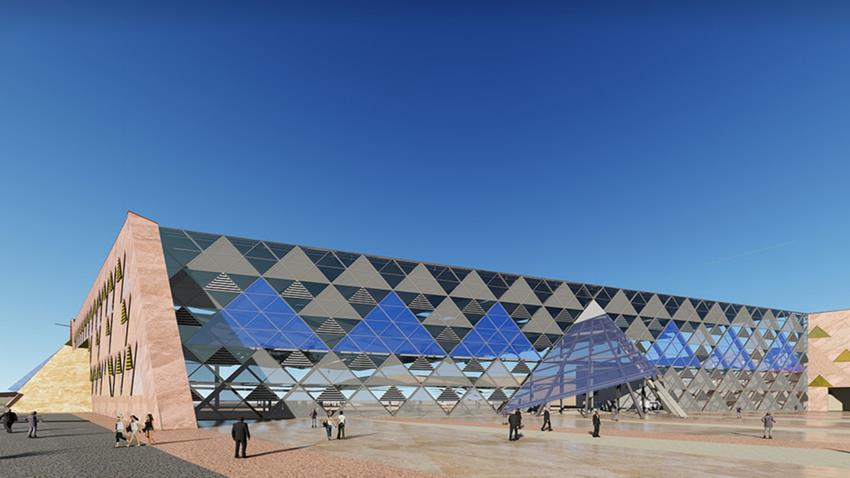
The museum itself is a modern architectural artifact.
Cost: Over $1 billion USD (funded by a joint Egyptian effort and a loan from the Japan International Cooperation Agency, JICA), making it one of the most expensive cultural projects in history.
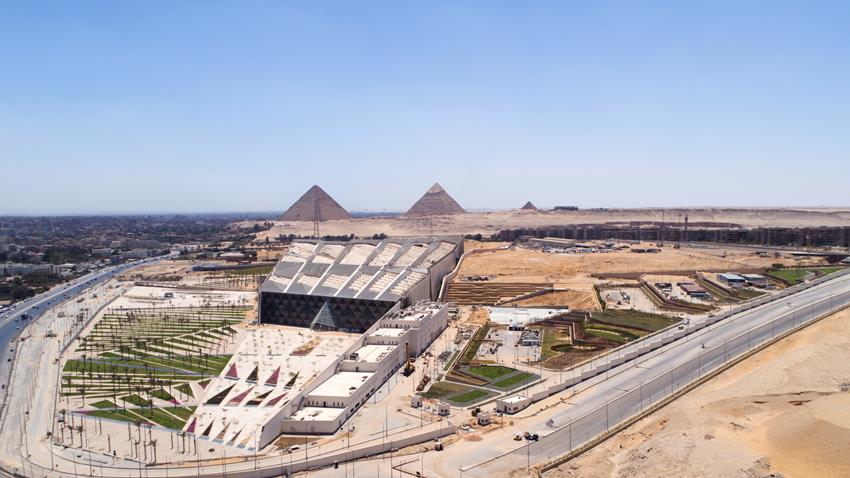
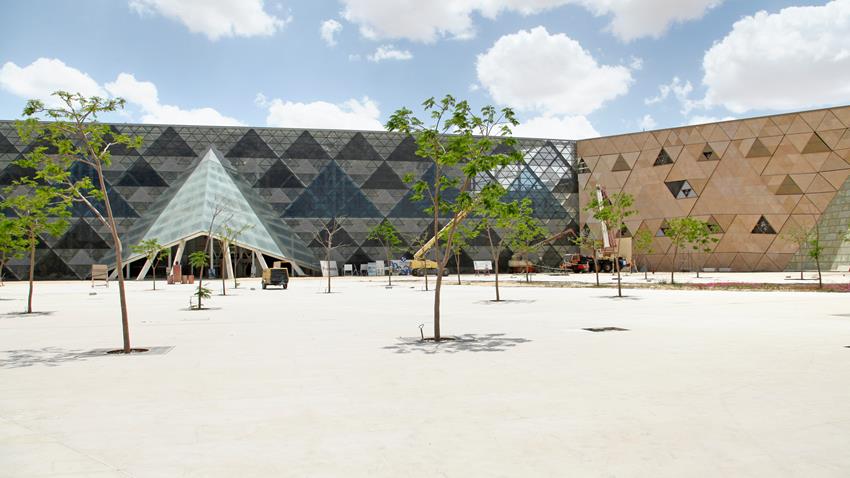
Total Area: The complex spans a massive 500,000 square meters (half a million square meters). To put this number in perspective, the museum’s area is larger than the entire state of Vatican City.
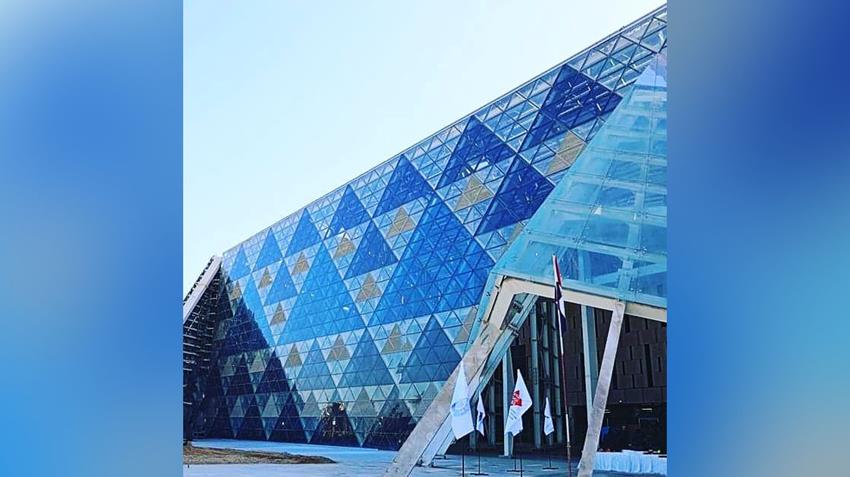
Design: The design, by the Irish firm “Heneghan Peng Architects,” won a global architectural competition. The design features a giant, 600-meter-long translucent alabaster facade known as the “Hanging Wall,” which overlooks the Pyramids.
Location: It is located just 2 kilometers from the Giza Pyramids, connected by a new “tourist walkway,” creating a visual and intellectual dialogue between the glory of the past and the genius of the present.
The museum is not just a building; it is a repository of human history.
Total Artifacts: According to Egyptian presidency data, the museum will house more than 50,000 unique artifacts that have been transferred and restored for display (specifically, 57000 artifacts have been moved), making it the largest collection dedicated to a single civilization.
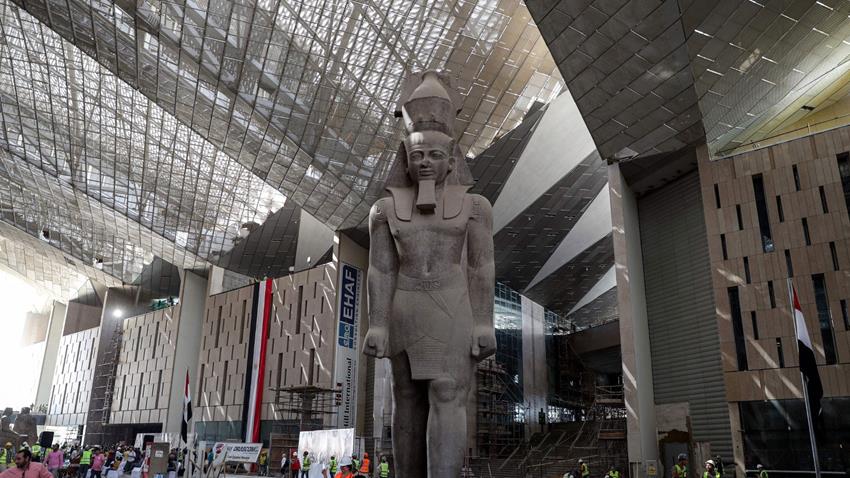
Statue of Ramses II: In the main atrium (the Grand Hall), visitors are greeted by the majestic statue of Ramses II, weighing 82 tons and standing 3,200 years old, which was moved in a historic procession to its new home.
The Grand Staircase: Visitors ascend the “Grand Staircase,” an architectural masterpiece and an exhibition in itself. The final design of this staircase features 72 monumental statues of Egypt’s most important kings and gods, arranged chronologically to tell the story of Egyptian glory step by step.
The Main Event: Tutankhamun's Complete Collection
This is the museum’s beating heart and the main reason for the world’s anticipation. For the first time in history, since the tomb’s discovery on November 4, 1922, the complete collection of the Golden King Tutankhamun will be displayed in one place.
The (Official) Number: 5,340 artifacts from the boy king’s treasures (according to official transfer records).
Display Area: Two galleries entirely dedicated to King Tut, spanning an area of 7,000 square meters (larger than a football field).
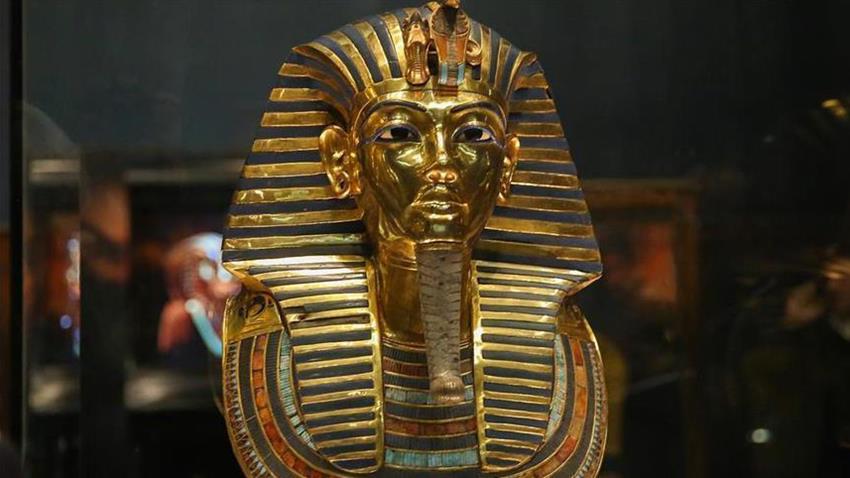
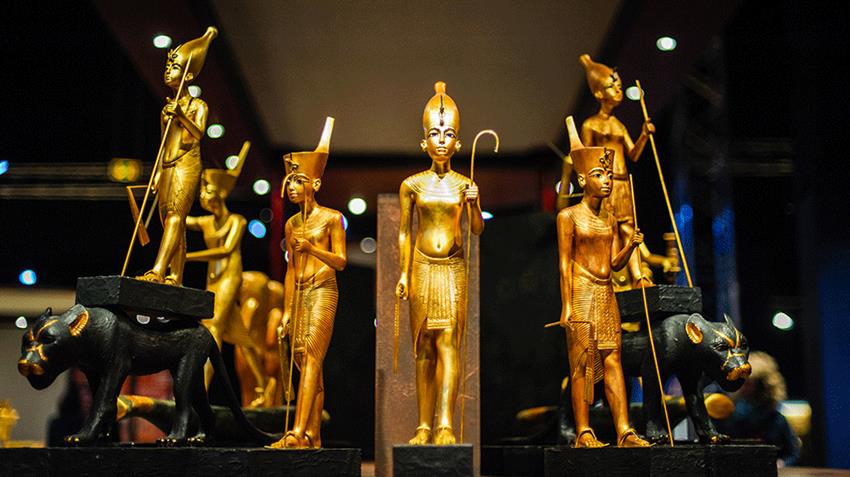
Treasures on Display: The world will see the iconic golden mask, the three golden sarcophagi (including the solid gold inner sarcophagus), the thrones, the jewelry, the funerary beds, all six of his chariots, and thousands of pieces never before seen by the public.
The Solar Barks and the Scientific Restoration Center
Khufu’s Solar Barks: The museum includes a massive, independent building to display the “First Solar Bark” of King Khufu, which was moved as a single piece in a complex engineering operation that took 48 hours, to preserve it in a controlled environment.
The Restoration Center: The museum is not just for display; it is a scientific institution. It includes the largest restoration center in the Middle East (covering 32,000 square meters), equipped with 19 specialized laboratories (for wood, stone, mummies, papyri, etc.). This center is what “saved” and restored thousands of artifacts, including Tutankhamun’s collection, over the past several years.
Your Guide to Visiting: Official Prices & Operating Hours (November 2025 Update)
Since you are planning to visit this monument, here is the official, confirmed information you need to book your ticket after the public opening on November 4, 2025.
Official Ticket Prices for the Grand Egyptian Museum (After Nov 4, 2025)
| Visitor Category | Adult Ticket Price | Student / Child / Senior Price |
| Foreigners (Other Nationalities) | 1200 EGP (or $25 USD) | 600 EGP |
| Egyptians | 200 EGP | 100 EGP |
| Arabs and Residents in Egypt | 600 EGP | 300 EGP |
(Note: These prices are for entry to the main exhibition halls. There may be additional tickets for special guided tours or temporary exhibitions.)
Expected Visiting Hours
The museum is expected to operate for long hours to welcome visitors. Official information indicates the hours will be:
Museum Complex (Plazas & Restaurants): 8:30 AM – 10:00 PM
Exhibition Halls (Galleries): 9:00 AM – 9:00 PM
Last Ticket Purchase: 8:00 PM
The Extending Bridge: From the Museum to the Roots of Egyptian Medicine
When you stand in the Grand Hall of the GEM before the statue of Ramses II, or marvel at the precision of Tutankhamun’s mask, you are not just seeing art and beauty; you are witnessing the product of a complete “ecosystem of genius.”
This genius, which allowed the Egyptian engineer to calculate the angles of the pyramids with astonishing accuracy, is the same genius that drove the Egyptian physician to study the human body with a depth unprecedented in ancient history. Art, engineering, and medicine were not isolated fields; they were all applications of a single science aimed at understanding the universe and achieving eternity.
The Egyptian Civilization: A Celebration of Science and the Body
Egyptian medicine did not arise from a vacuum; it was a necessity dictated by belief. The faith in resurrection and eternity required preserving the physical body (the mummy) intact to receive the soul (the “Ka”). The complex process of mummification was not just a religious ritual; it was the first precise anatomy lesson in human history.
Knowledge of Internal Organs: Mummifiers (who were closely linked to priests and doctors) had to extract and preserve internal organs, understanding their function. They knew the heart, liver, lungs, and brain (although they did not attribute as much importance to it as the heart).
The Medical Papyri: The Grand Museum is an extension of what is preserved in papyri like the Ebers Papyrus and the Edwin Smith Papyrus. These are not mere “magic spells” but scientific medical records. The Edwin Smith Papyrus, for example, is the oldest known surgical treatise, describing 48 cases of trauma, classifying them, and offering methods of examination and treatment, including stitching wounds and using splints for fractures.
"Houses of Life" and the System of Medical Specializations
Medicine was not a random practice. The ancient Egyptians established what is known as the “Per Ankh” or “House of Life,” institutions attached to major temples that served as universities, libraries, and centers for research and scribal work. In the “House of Life,” medicine, astronomy, and mathematics were taught. From here, the system of medical specializations emerged for the first time in history. There wasn’t just a “general practitioner”; inscriptions record astonishing titles:
Doctor of the Eyes (Khet-irty).
Doctor of the Stomach (Nerphu).
Chief of Physicians of the Royal Palace.
And most importantly… the Dentist.
"Hesy-Ra": The First Recorded Dentist in History
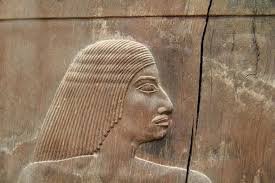
Here lies the key that directly links the museum to our topic. During the era of King Djoser (builder of the Step Pyramid at Saqqara, Third Dynasty, circa 2650 BC), there lived a high-ranking official named “Hesy-Ra”.
The magnificent wooden panels found in his tomb (which are icons of ancient Egyptian art) were not his most important legacy. Hesy-Ra held many titles, including one that is astonishing and rare: “Wer-ibeḥsenjw”. This title literally translates to “Chief of Dentists” or “Chief of Ivory and Tooth Specialists.” The importance of this title is that it proves, beyond a shadow of a doubt, that over 4,600 years ago, dentistry was not a marginal practice but an officially recognized medical specialty in the Egyptian state, with a “Chief of Dentists” holding a high-ranking title in the royal court. Hesy-Ra is the first dentist in all of human history known by name and title.
How Did the Pharaohs Treat Their Teeth? Astonishing Archaeological Evidence
Hesy-Ra’s title was not merely honorary. The Pharaohs actively practiced dentistry, and the archaeological evidence that will be displayed in the Grand Museum and the National Museum of Egyptian Civilization is a testament to this:
Dental Surgeries: Drilling and Draining Abscesses
Skulls and mummies dating back to the Fourth Dynasty have been found with precise holes drilled skillfully at the roots of molars. These holes were not random; they were clearly intended to drain painful abscesses that had formed under the tooth, a delicate surgical procedure to relieve pain.
Orthodontics and Aesthetics: Gold Wires and Replacement Teeth
They didn’t stop at treatment; they also pursued aesthetics and restoration.
Dental Bridges: Mummies have been discovered with teeth bound together using fine gold wire. In one famous case, a loose tooth was tied to the healthy adjacent tooth to prevent it from falling out.
Replacement Teeth: Another case was found of a replacement tooth (possibly another person’s tooth or an animal tooth carved to fit) tied to adjacent teeth with gold wire, in an attempt to replace a missing tooth—considered the oldest form of a “dental bridge” in history.
The First "Toothpaste" in History
They didn’t just focus on treatment but also on prevention. Papyri refer to recipes for what is believed to be the first “tooth powder” (an early toothpaste) consisting of a mixture of rock salt, mint, black pepper, and dried iris flowers, to maintain oral and gum hygiene.
The Legacy of "Hesy-Ra": Who is Your Dentist in Modern Egypt?
This 5,000-year-old legacy of precision and medical innovation has not vanished. It has evolved. Just as ancient Egypt was the world’s destination for learning in the “Houses of Life,” today’s Egypt has become a regional and global hub for medical expertise.
Medical Tourism: Why Has Egypt Become a Global Dental Destination?
Today, thousands of visitors come to Egypt not only to visit the Grand Egyptian Museum and the Pyramids but for another purpose: to get the perfect smile.
Expertise: Egyptian doctors, trained in the finest Egyptian and European universities, carry this legacy of skill.
Cost: Services (like dental implants, Hollywood Smile) can be obtained at a quality that rivals Europe and America, but at a cost that can be as low as 30% of the price in those countries.
The Experience: There is no other place in the world that allows you to visit the last wonder of the ancient world (the Pyramids) and the newest wonder of the modern world (the GEM) during your recovery period after your dental procedure.
Dr. Mohamed Omara Centers: A Modern Embodiment of 5,000 Years of Genius
When an international tourist searches for the “best dentist in Egypt for medical tourism,” they are looking for trust, international accreditation, and guaranteed results. Here, the name Dr. Mohamed Omara Centers emerges as a perfect example of the continuation of this Pharaonic legacy of precision and quality.
European Quality: A Master's Degree from the University of Parma, Italy
Just as Hesy-Ra held the highest titles of his time, Dr. Mohamed Omara holds the highest modern academic degrees. He holds a Master’s Degree in Orthodontics and Cosmetic Dentistry from the University of Parma (Università di Parma), Italy. This prestigious European accreditation means that every treatment plan, every veneer, and every implant procedure is carried out according to the latest Italian and European aesthetic protocols and standards.
Global Standards: ISO 9001 Certification
Trust is key in medical tourism. Dr. Mohamed Omara Centers are ISO 9001 certified. This is not just a certificate; it is a guarantee and a commitment to applying the highest quality standards at every step:
Superior Sterilization: Following strict protocols to ensure a 100% safe treatment environment.
Material Quality: Using the best international materials, whether for implants (Swiss and German brands) or veneers (E-max).
Patient Care Management: An integrated system for following up with the patient from their arrival at the airport until their departure.
Personal Supervision: The Expert's Touch That Guarantees Trust
In the world of large medical centers, a patient might feel like just a number. But at Dr. Mohamed Omara Centers, a unique principle is applied: “Dr. Mohamed Omara personally supervises all cases.” This personal supervision from a European-certified expert ensures that every patient, especially those coming from abroad, receives a treatment plan designed specifically for them and with the highest degree of precision.
Your Perfect Journey: Visiting the Grand Museum and Getting a Hollywood Smile
Now, you can combine both dreams in one unforgettable trip.
Digital Smile Design (DSD): Engineering Precision that Rivals Pyramid Construction
Just as the Pharaonic engineer used his tools to design the pyramid with precision, Dr. Omara’s centers use Digital Smile Design (DSD). You can see your new smile on a computer screen, modify it, and approve it before we even begin, ensuring results that 100% match your expectations.
Immediate Loading Implants: Restore Your Smile in One Trip
Just as the ancient Egyptian “installed” a replacement tooth with gold wire, today you can get an instant replacement tooth. Thanks to Immediate Loading techniques and 3D CBCT scans, you can walk in with missing teeth and leave on the same trip with implants and fixed crowns, ready to smile in your photos in front of the Grand Egyptian Museum.
Combining Both Experiences: An Integrated Tourism and Treatment Program
Dr. Mohamed Omara Centers offer all-inclusive medical tourism packages that make this combination seamless, especially with one of the center’s main branches located in the Giza area, just a 15-minute drive from the Grand Egyptian Museum.
This exceptional proximity makes organizing your schedule incredibly easy. You can visit the museum in the morning and go to your treatment session in the afternoon with complete comfort. The packages include:
Airport reception.
Booking luxury hotel accommodations (either near the museum and the Giza branch, or as you choose).
Flexible scheduling of your treatment appointments to fit your visit to the Grand Museum and the Pyramids.
Follow-up care until your safe return home.
Frequently Asked Questions (FAQ)
When is the full opening of the Grand Egyptian Museum?
The presidential ceremony and grand opening already took place on November 1, 2025. The official public opening begins on November 4, 2025.
How much is the Grand Egyptian Museum ticket for foreigners?
The official ticket price for an adult foreign visitor is 1200 EGP (approximately $25 USD).
Do I need a long time to get my dental treatment in Egypt?
No. Thanks to digital technology, a “Hollywood Smile” (full veneers) can be completed in 3 to 7 days. Immediate dental implants can be done in a trip of no more than 3 days, which is the perfect amount of time to combine treatment and tourism.
Why should I trust Dr. Mohamed Omara Centers specifically?
Because of the three guarantees: Academic Accreditation (Master’s from Italy), Administrative Accreditation (ISO 9001), and the Personal Guarantee (Dr. Omara’s personal supervision of every case).
Conclusion: A History You Can See... and a Future You Can Smile With
Your visit to Egypt in 2025 and beyond is an unparalleled experience. On one hand, you are witnessing the greatest cultural achievement of the modern era, the Grand Egyptian Museum, and seeing with your own eyes the treasures of the past that shaped humanity’s conscience.
On the other hand, you have the opportunity to witness the continuation of this genius. You are not just visiting the past; you are investing in your future. While you are dazzled by the precision of the Pharaohs in carving gold and making history, you can benefit from the precision of modern Egyptian doctors in carving your smile and making your future.
Egypt invites you to visit the legacy of “Hesy-Ra” in the Grand Museum, and invites you to apply that legacy at Dr. Mohamed Omara Centers—to return to your homeland not just with memories of gold, but with a golden smile.