
orthodontics
A Comprehensive and Detailed Guide to Orthodontic Treatment - Your Complete Journey to a Healthy and Beautiful Smile
A smile is a sign of health and self-confidence, and orthodontics is the key that opens the door to a perfect smile. The decision to undergo orthodontic treatment is not just a cosmetic step; it is a long-term investment in the complete health of your mouth, as it ensures proper function of your teeth and jaws and protects them from future problems. In this comprehensive and detailed guide, we will delve into every aspect of orthodontic treatment, from the reasons for needing it, through its various types, to the finest details about the treatment journey.
⏱️ The 30-second summary
- Orthodontic treatment gradually moves teeth into the right position, improving both the smile and the bite.
- The main types are metal, clear (ceramic), lingual braces behind the teeth, and removable clear aligners.
- Treatment time depends on the case and usually takes about 1 to 2 years.
- Pressure or mild pain after fitting or adjustments is normal and eases within days.
- Orthodontics is suitable for adults too, not only for children.
- After the braces are removed, a retainer must be worn as instructed to keep the result.
Last updated: October 2026 · Dr. Mohamed Omara Dental Centers team
📑 Table of contents
Understanding Orthodontics: What It Is and How It Works?
Orthodontics is a specialized branch of dentistry that focuses on the diagnosis, prevention, and treatment of malocclusion (bad bite) and misaligned teeth. Its work relies on a simple yet highly effective scientific principle: applying continuous and gentle pressure on the teeth. This pressure stimulates the bone cells surrounding the tooth roots to rebuild themselves. On the side where pressure is applied, the bone erodes slightly to allow the tooth to move, while on the opposite side, new bone forms to support the tooth in its new position. This slow and controlled process ensures that the teeth move safely and stably into their correct place. The main components that perform this work are:
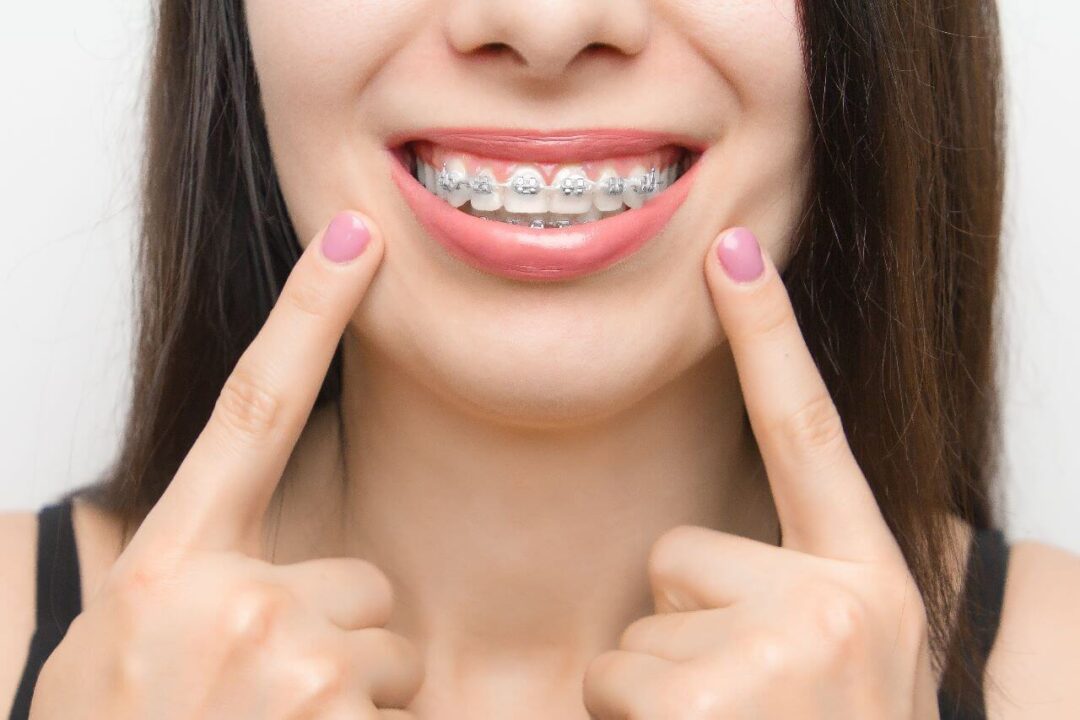
Brackets: These are the metal or ceramic pieces that are attached to each tooth.
Archwires: These are the wires that pass through the brackets and provide the necessary force to move the teeth.
Elastics: These are small rubber bands that connect the wires and brackets and help move the teeth.
Benefits of Orthodontics: Not Just for Looks
Discussions about orthodontics often focus on the aesthetic aspect, but the health and functional benefits are what often make it a necessity.
Improved Overall Oral Health: Properly aligned and straightened teeth are easier to brush and floss. This significantly reduces the buildup of plaque and tartar, thus lowering the risk of tooth decay, gum inflammation, and advanced gum diseases that can lead to tooth loss.
Improved Biting and Chewing Function: Malocclusion problems can lead to difficulty chewing food, which affects the digestive process. Orthodontics ensures that the upper and lower teeth meet correctly, which distributes chewing pressure evenly and improves the efficiency of this process.
Prevention of Abnormal Tooth Wear: When teeth are not properly aligned, abnormal friction can occur between them, leading to uneven wear of the enamel surface. Orthodontic treatment corrects this friction and protects the teeth from excessive wear.
Relief of Jaw and Facial Pain: Bite problems can cause strain on the jaw muscles and the temporomandibular joint (TMJ), leading to chronic jaw pain, headaches, and earaches. Correcting the bite helps relieve this strain and reduce these pains.
Improved Speech: Some speech problems, such as a lisp, can result from improper tooth positioning. Orthodontics can correct this position and contribute to improved speech clarity.
Conditions Requiring Orthodontics: Types of Malocclusion
Orthodontics goes beyond “crooked teeth” to include a wide range of bite problems that can be corrected.
Crowding: When the jaw is too small to accommodate all the teeth naturally, causing them to overlap and become crowded.
Spacing: The presence of wide gaps between teeth, which can occur due to missing teeth or a mismatch between tooth size and jaw size.
Open Bite: When the upper and lower front teeth do not meet when the mouth is closed, leaving a gap between them.
Overbite: The upper front teeth protrude significantly over the lower teeth.
Underbite: The lower teeth protrude over the upper teeth.
Crossbite: When some of the upper teeth overlap their lower counterparts in a reversed manner.
📖 Read also: Pediatric dentistry
Dr. Mohamed Omara dental implant and Cosmetic Center
Types of Orthodontic Braces: Multiple Options for Every Need
Orthodontic options have evolved significantly to suit various aesthetic needs and budgets.
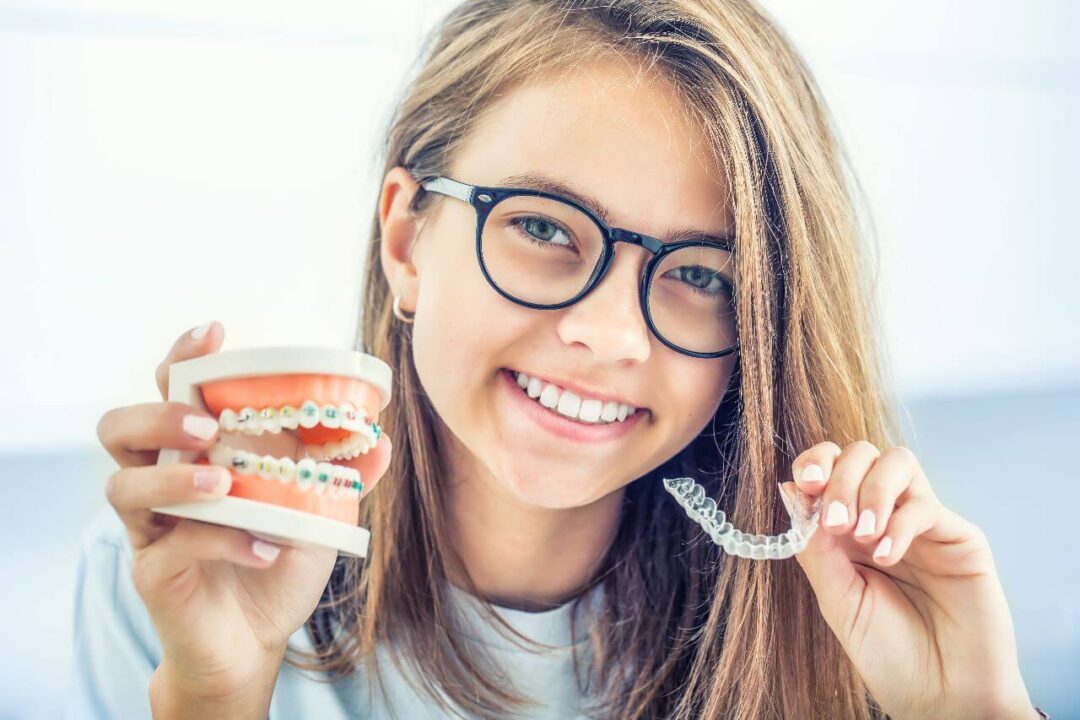
1. Traditional Metal Braces:
2. Ceramic (Clear) Braces:
3. Lingual (Internal) Braces:
4. Clear Aligners (Invisalign):
Traditional Metal Braces: This is the most common and reliable type. It consists of stainless steel metal brackets attached to the teeth, connected by metal wires.
Advantages: Highly effective in treating complex cases, and the cost of metal braces is often the lowest compared to other types.
Disadvantages: Their appearance is very noticeable, and they may cause some initial discomfort.
Ceramic (Clear) Braces: They work on the same principle as metal braces but use clear or tooth-colored brackets.
Advantages: Much less noticeable than metal braces, making them a preferred aesthetic option for adults.
Disadvantages: Can be more prone to breakage or staining if not well-cared for, and their cost is higher than metal braces.
Lingual (Internal) Braces: This is a modern technique where brackets and wires are placed on the inner surface of the teeth (the side facing the tongue).
Advantages: Completely invisible from the outside, making them an ideal option for those who want discreet treatment.
Disadvantages: May cause some initial difficulty with speech and can be uncomfortable for the tongue, and their cost is the highest among all types.
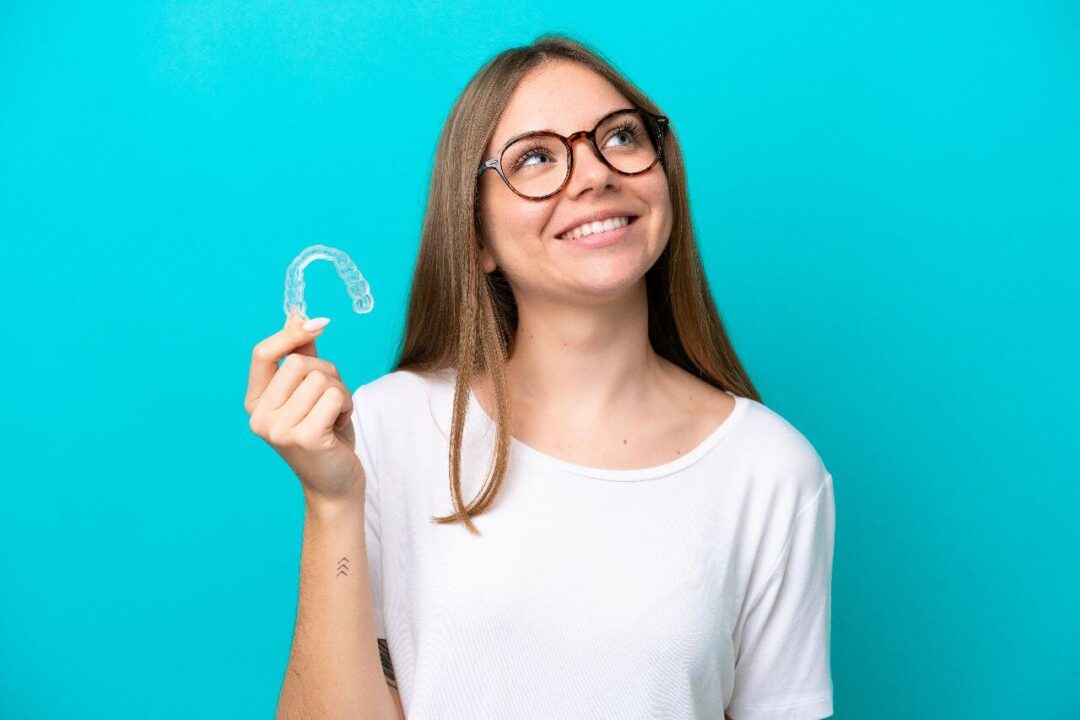
Clear Aligners (Invisalign): This relies on a series of clear, medical-grade plastic aligners designed using 3D computer technology. The aligners are changed approximately every two weeks.
Advantages: Removable for eating and cleaning, making them very comfortable. They are virtually invisible and cause less discomfort.
Disadvantages: Not suitable for all complex cases, requires strict commitment to wearing them for at least 22 hours a day, and their cost is high.
📖 Read also: Cosmetic dentistry
The Orthodontic Treatment Journey: A Step-by-Step Guide
The treatment journey involves several specific stages to ensure the best results.
Initial Consultation and Comprehensive Diagnosis: The journey begins with a visit to a specialist dentist (an orthodontist). The doctor performs a full oral examination, takes X-ray images (panoramic and cephalometric), and facial and dental photographs, in addition to taking digital or physical impressions of the teeth. This information is used to create a personalized and detailed treatment plan.
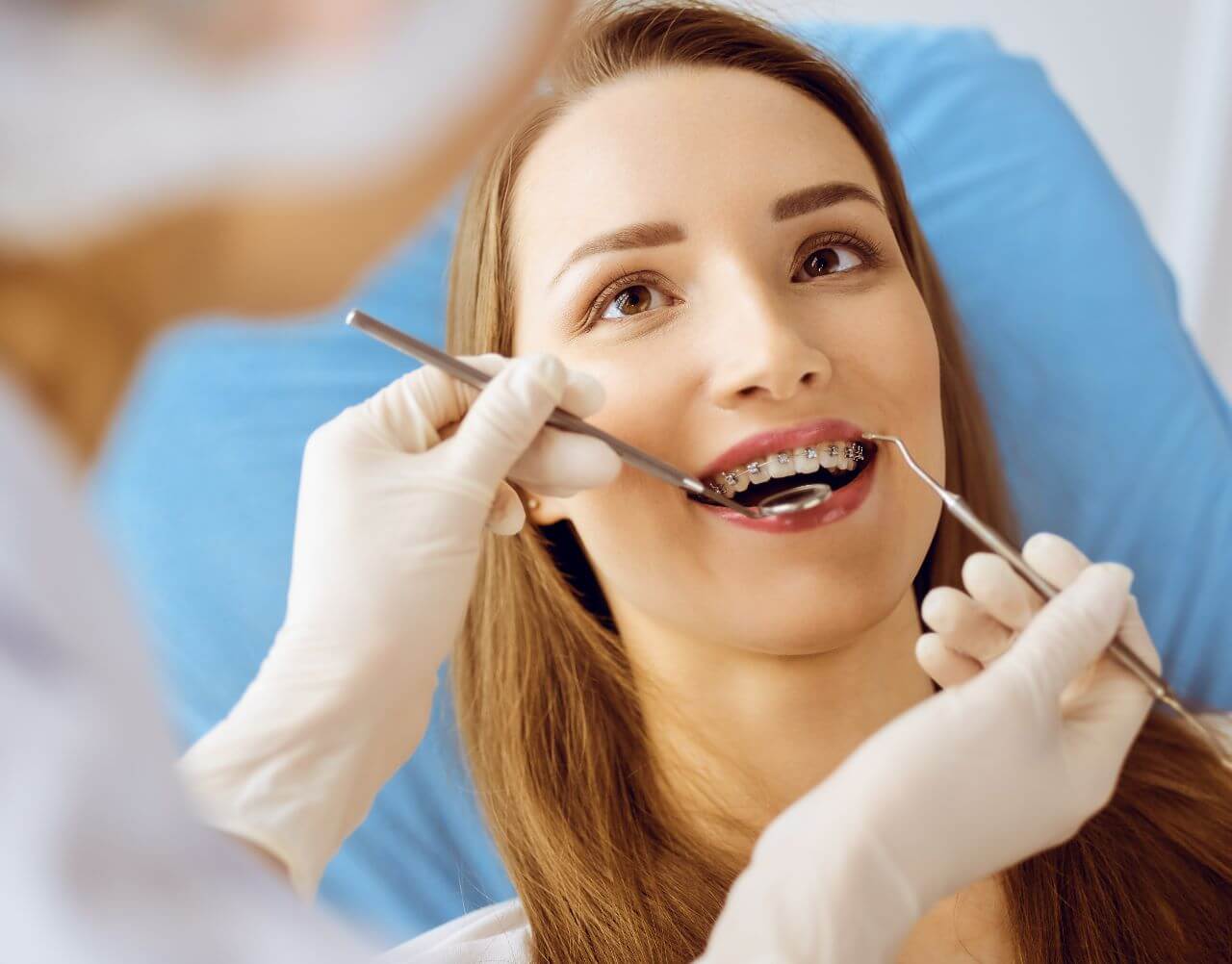
Braces Placement: After the patient agrees to the treatment plan, the brackets and wires are placed. This process usually takes one to two hours. The patient may feel some pressure or slight pain in the first few days after placement, which can be managed with over-the-counter pain relievers.
Regular Adjustment Appointments: During the duration of the orthodontic treatment, there will be regular visits to the doctor every 4 to 8 weeks. In these visits, the doctor changes the wires or rubber bands, which continues to apply the necessary force to move the teeth. These visits are crucial for the success of the treatment.
Braces Removal: At the end of the scheduled period, when the teeth have reached their ideal position, the doctor removes the braces. This process is quick and painless.
Retention Phase: This stage is the most important for maintaining the results. After the braces are removed, the teeth are in a state of “shock” and try to return to their original position. Therefore, the doctor prescribes a retainer (either fixed behind the teeth or removable) that must be worn as instructed for several months or even years to maintain the results for life.
📖 Read also: Orthodontic instructions for the best results
Factors Affecting the Cost and Duration of Orthodontic Treatment
The cost and duration of orthodontic treatment are among the most common questions. There is no fixed number, as it depends on:
Type of Braces: Metal braces are the least expensive, while clear and lingual braces are the most expensive.
Condition of the Teeth: More complex cases require more time and, therefore, a higher cost.
Patient’s Age: In many cases, treatment for children is faster and less expensive than for adults because their jaws are still in the growth phase.
Personal Commitment: Failure to maintain oral hygiene or wear removable appliances can prolong the treatment duration.
📖 Read also: Medical tourism in Egypt
Detailed Tips for Caring for Your Teeth During Orthodontic Treatment: Your Complete Guide
Oral care during orthodontic treatment is the cornerstone of successful treatment and avoiding any damage to teeth from braces such as decay or gum inflammation. Since brackets and wires create additional places for food debris and bacteria to accumulate, your daily care routine must be more precise and attentive.
Brushing: More Than Just a Normal Wash
The Right Toothbrush: Use a soft-bristled toothbrush. You can also use a special toothbrush for braces (Oral-B Ortho Brush) which has shorter bristles in the middle to clean the brackets better, or even an electric toothbrush with a dedicated head for orthodontics.
The Correct Method: Don’t just clean the teeth. Start by cleaning the top part of the brackets at a 45-degree angle to reach the spaces between the wire and the gums, then clean the bottom part of the brackets in the same way. After that, clean the outer, inner, and chewing surfaces of the teeth normally.
How Often to Brush: Brush your teeth after every meal, no matter how small, to ensure immediate removal of any debris. If you can’t, rinse your mouth with water vigorously.
Using Dental Floss: Indispensable
Why It’s Important? Dental floss is the only tool that can remove plaque and food debris from between the teeth and below the gumline. Skipping this step can lead to tartar buildup and inflammation.
Assisted Tools: Using dental floss with braces can be difficult, so we recommend using assisted tools such as:
Floss Threaders: A flexible plastic piece that looks like a needle and helps you easily pass the floss under the wire.
Interdental Brush: A small brush that looks like a “bottle brush” used to clean the small gaps between the brackets and teeth.
Routine: Dedicate time daily, preferably before bed, to use dental floss or the interdental brush.
Diet: What to Avoid and What to Eat
Hard Foods: Avoid foods that require hard biting or could break the brackets. These include nuts, popcorn, ice, hard candy, and un-cut apples or carrots.
Sticky Foods: Stay away from anything that can stick to the braces or pull the brackets out of place. Examples include gum, caramel, and some types of gummy candies.
Safe Foods: You can eat soft foods such as soup, juices, yogurt, mashed potatoes, rice, pasta, and well-cooked meat cut into small pieces.
Minor Emergencies: How to Act?
A Poking or Irritating Wire: If a wire is bothering your cheek or gums, do not try to cut it yourself. You can use the orthodontic wax provided by your doctor to cover the sharp end. Place a small ball of wax on the protruding part to relieve the discomfort.
A Loose or Broken Bracket: If a bracket comes off a tooth, call your doctor immediately. You can leave the bracket in place and cover it with wax if it is bothering you until your appointment.
Avoid Delays: Do not postpone your visit to the doctor to fix any problem, as this may prolong the treatment duration or affect the final result.
📖 Read also: Teeth cleaning and tartar removal
Frequently Asked Questions About Orthodontic Treatment (Expanded Section)
Here we provide you with detailed answers to the most common questions asked by people considering starting an orthodontic journey.
Q1: Does orthodontic treatment really hurt? And how can I deal with the pain? A: The feeling of pain or discomfort after placing the braces or after each adjustment visit is very common and normal, but it’s not a sharp pain. Most patients describe it as a feeling of pressure or heaviness on the teeth. This discomfort usually disappears within a few days. To deal with it, you can use over-the-counter pain relievers such as paracetamol or ibuprofen (after consulting your doctor), and eat soft foods during the first few days, such as soup, juices, and yogurt.
Q2: What foods should I completely avoid during the treatment period? A: You should avoid any hard, sticky, or crunchy food that could cause a bracket or wire to break or be damaged. The most prominent of these foods are:
Hard foods: such as nuts, popcorn, ice, and un-cut apples or carrots.
Sticky foods: such as caramel, gum, and gummy candies.
Foods that require strong biting: such as tough pieces of meat or French bread. We recommend cutting food into small pieces to make it easier to chew.
Q3: Can I play sports or musical instruments with braces? A: Yes, you certainly can. If you play a sport that involves physical contact such as football or basketball, it is essential to wear a specially designed mouthguard to protect your mouth and your braces from any injuries. As for playing musical instruments, you may need some time to adapt to the presence of braces in your mouth, especially wind instruments.
Q4: What are the potential damages or risks of orthodontic treatment? A: When braces are done by a specialist doctor, the risks are few. But the most important problems that can occur are:
Tooth decay and stains: If the teeth are not cleaned well, white spots can form around the brackets or decay can occur, so oral hygiene is the key.
Shortening of the roots: In very rare cases, a small part of the tooth roots may be absorbed, but this does not affect the stability of the teeth.
Relapse: If the patient does not commit to wearing the retainer after the braces are removed, the teeth may return to their original position.
Q5: Can I whiten my teeth while I have braces? A: It is not recommended to whiten your teeth during the treatment period. Whitening materials will not reach the parts covered by the brackets, which will lead to the appearance of light-colored spots when the braces are removed. It is best to postpone whitening until after the treatment is completely finished.
Q6: What should I do if a part of my braces breaks or I feel a wire poking me? A: This is a minor emergency that is not a cause for concern. First, try to gently push the wire with a pencil eraser or cotton. If that doesn’t work, you can place a small piece of orthodontic wax (provided by your doctor) to cover the sharp part. Then, call your doctor’s clinic immediately to schedule an appointment to fix it as soon as possible.
Q7: Can adults be treated with orthodontics? And does it differ from treating children? A: Yes, adults can be successfully treated with orthodontics. The main difference is that adult jawbones are no longer in the growth phase, which sometimes makes the treatment duration a little longer than for children. But the final results are excellent. Adults also often prefer more aesthetic options such as clear or lingual braces.
Q8: Does health insurance cover the cost of orthodontic treatment? A: This depends on your specific health insurance plan. Some plans cover part of the cost of orthodontic treatment, especially if the treatment is medically necessary rather than purely cosmetic. It is essential to review your insurance policy or contact the insurance company to inquire about coverage.
Q9: Why is the retention phase after removing the braces so important? A: This phase is the most important for maintaining the results you have achieved. After the braces are removed, the teeth are not fully stabilized in their new position. The retainer prevents them from returning to their previous position. Failure to commit to wearing the retainer is the main reason for a relapse.
Q10: What is the time commitment I need to make for cleaning my teeth during orthodontic treatment? A: It is recommended to brush your teeth after every meal, or at least twice a day, morning and evening. The brushing process should preferably take at least two minutes each time, using specialized tools to reach all areas around the brackets and wires.

Why Choose Orthodontic Treatment at Dr. Mohamed Omara Dental Centers?
Choosing the right center to perform orthodontic treatment is a crucial step to ensure the best results safely and effectively. At our centers, we are committed to providing a unique and distinguished experience for our patients, through:
A Specialized Medical Team: Our center has a team of specialized dentists under the supervision of Dr. Mohamed Omara, who holds a Master’s degree in Orthodontics and Cosmetic Dentistry from Parma University in Italy, and has high experience and proven competence in dealing with all types of cases, from simple to the most complex.
The Latest Technologies and Materials: We use the latest technologies and devices in the field of orthodontics, including 3D digital scanning devices that ensure high accuracy in diagnosis and treatment planning.
Individualized Treatment Plans: Every smile is unique, so we design a customized treatment plan for each patient based on their specific needs and treatment goals.
International Quality Certificate: Our centers are proud to have the International Quality Certificate ISO, which confirms our commitment to the highest standards of care and service.
A Comfortable and Supportive Environment: We are keen to provide a friendly and comfortable environment that makes your visit to our clinic a positive and stress-free experience.
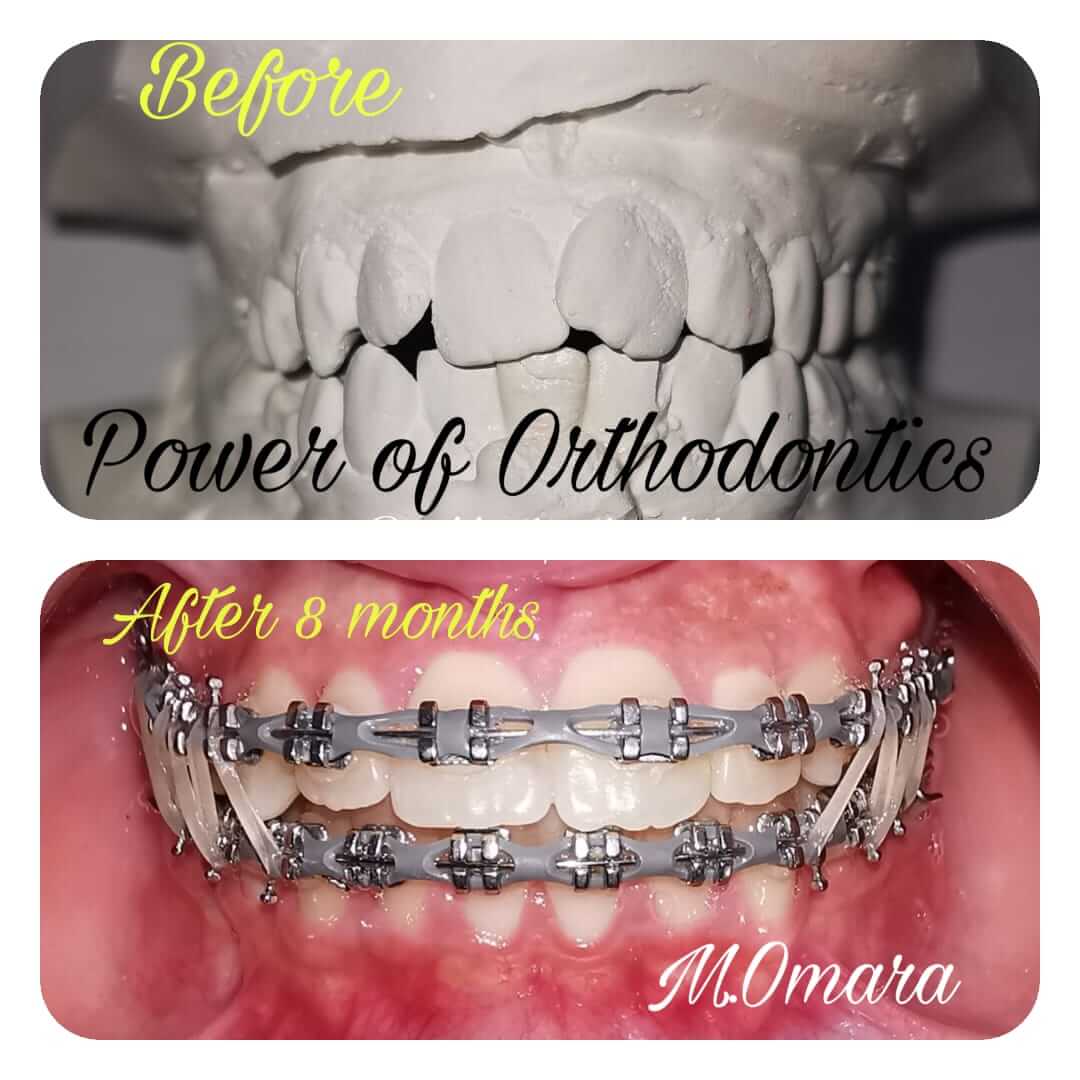
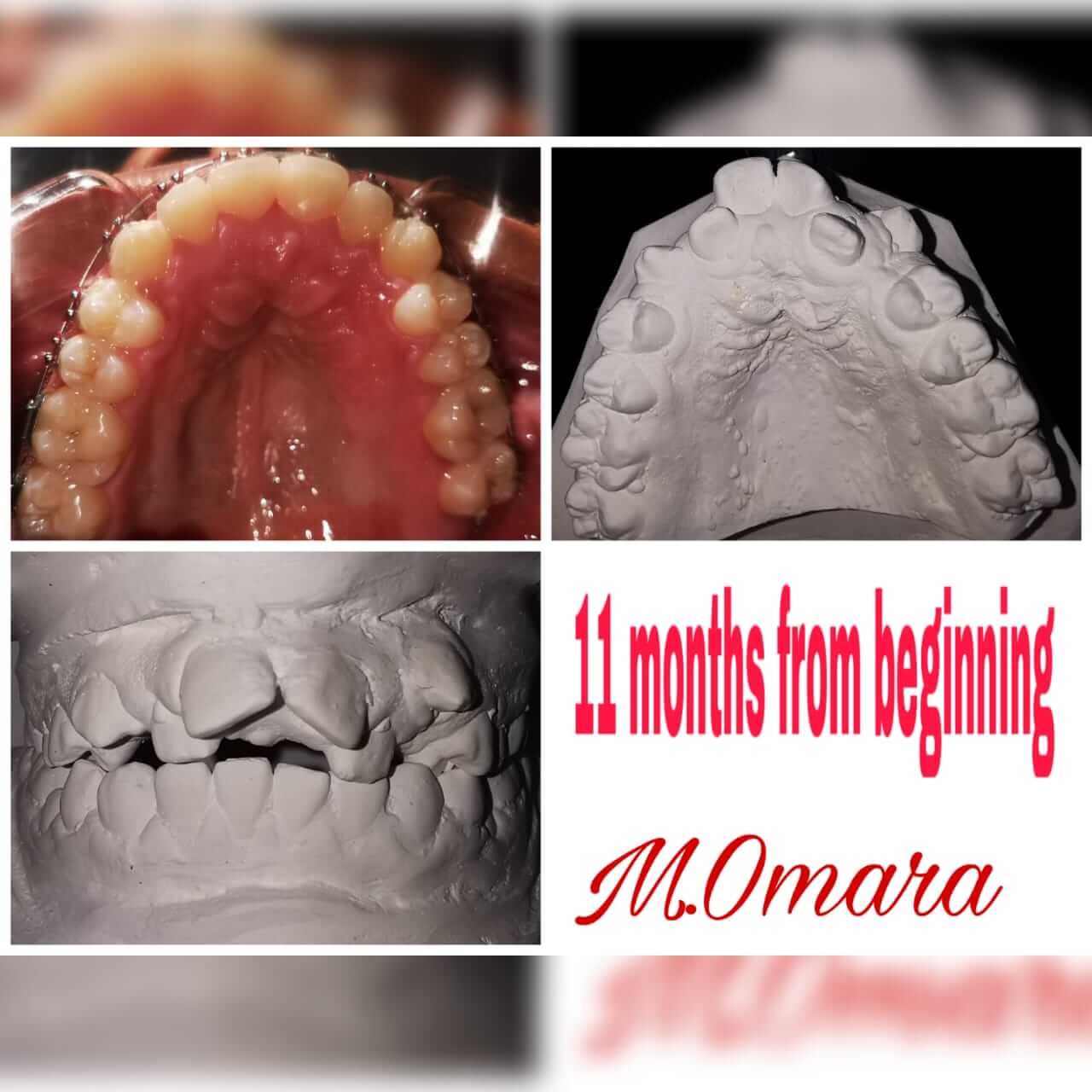
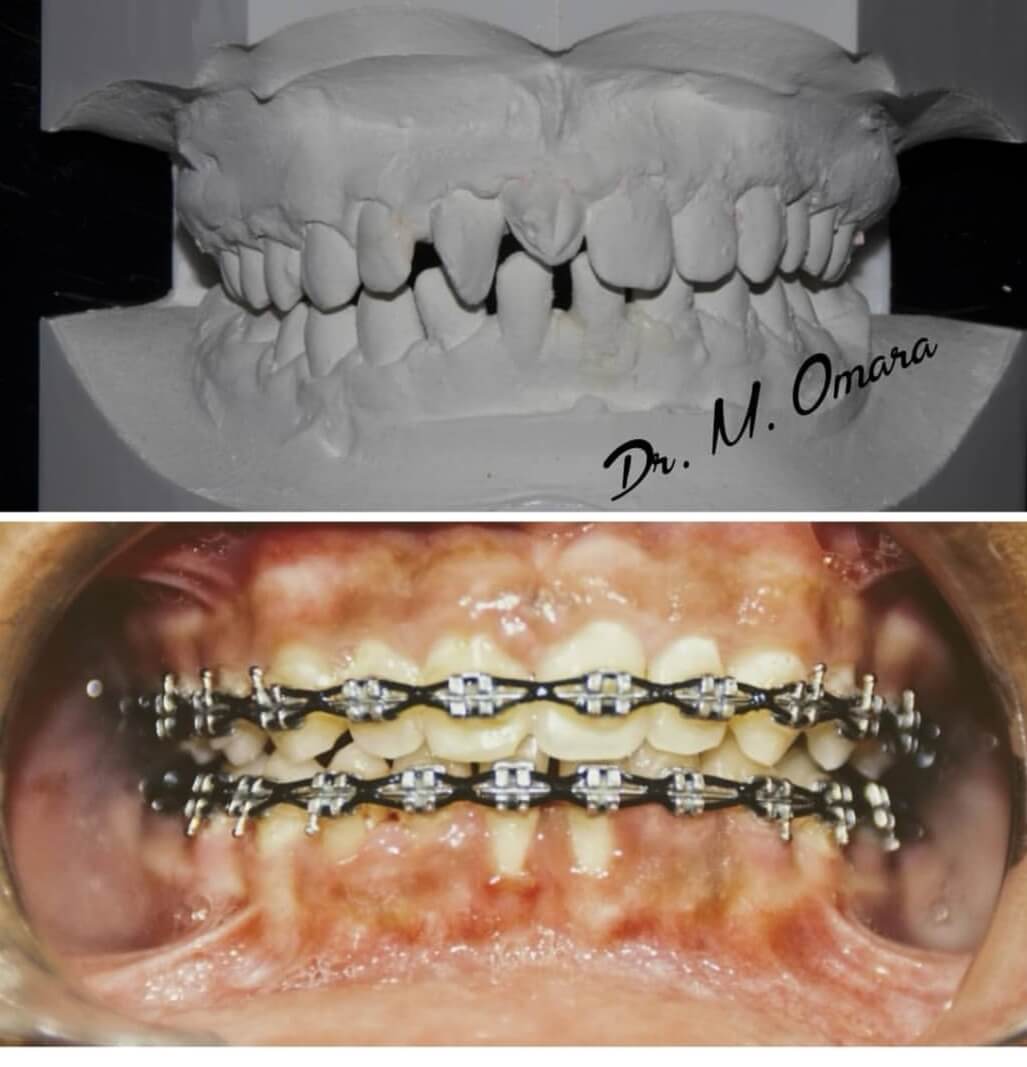
Some cases of Dr. Mohamed Omara
Conclusion
Orthodontic treatment is a worthwhile journey that ends with a healthy and beautiful smile that boosts your self-confidence for life. By following the tips mentioned and adhering to the doctor’s instructions, your journey will be smooth and its results will be satisfactory. If you have more questions, it is always best to consult a specialized orthodontist who can assess your condition and provide the most suitable advice.