Dental Implants in Egypt: The Comprehensive Guide to Prices, Stages, and Best Centers
Dental implants in Egypt are considered a true revolution in the world of cosmetic and therapeutic dentistry, offering a permanent and effective solution for replacing missing teeth. If you are thinking about restoring your full smile and self-confidence, this comprehensive guide will take you step-by-step through everything you need to know, from the stages and conditions to dental implant prices in Egypt and how to choose the best center for you.
What Are Dental Implants? And Why Are They the Best Solution?
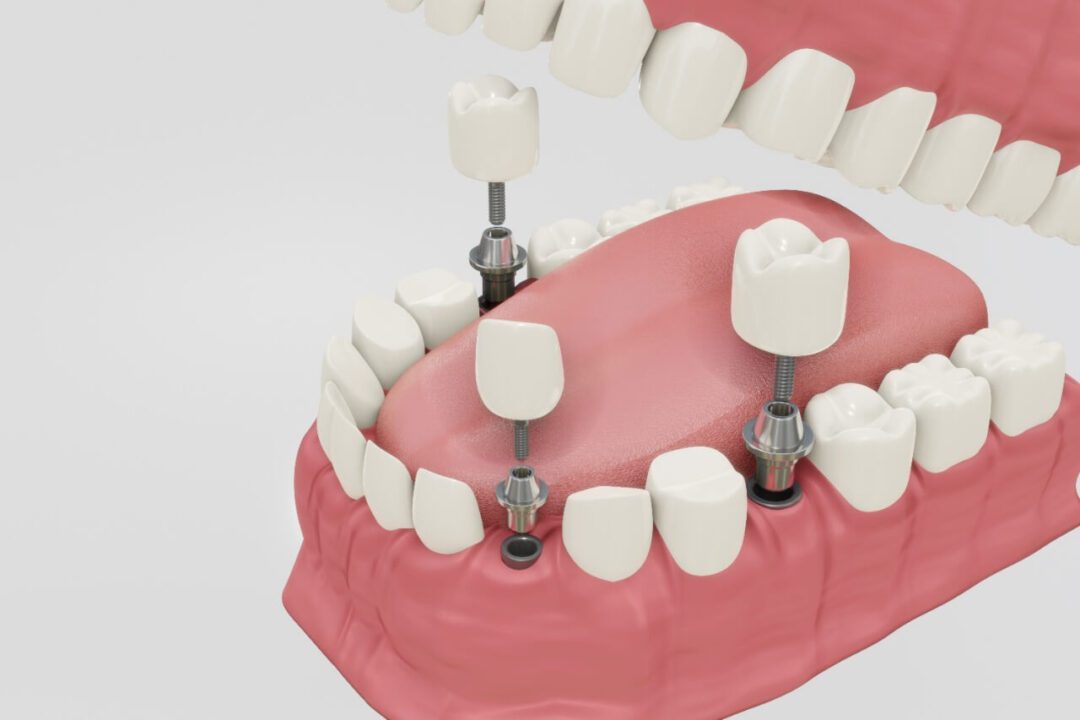
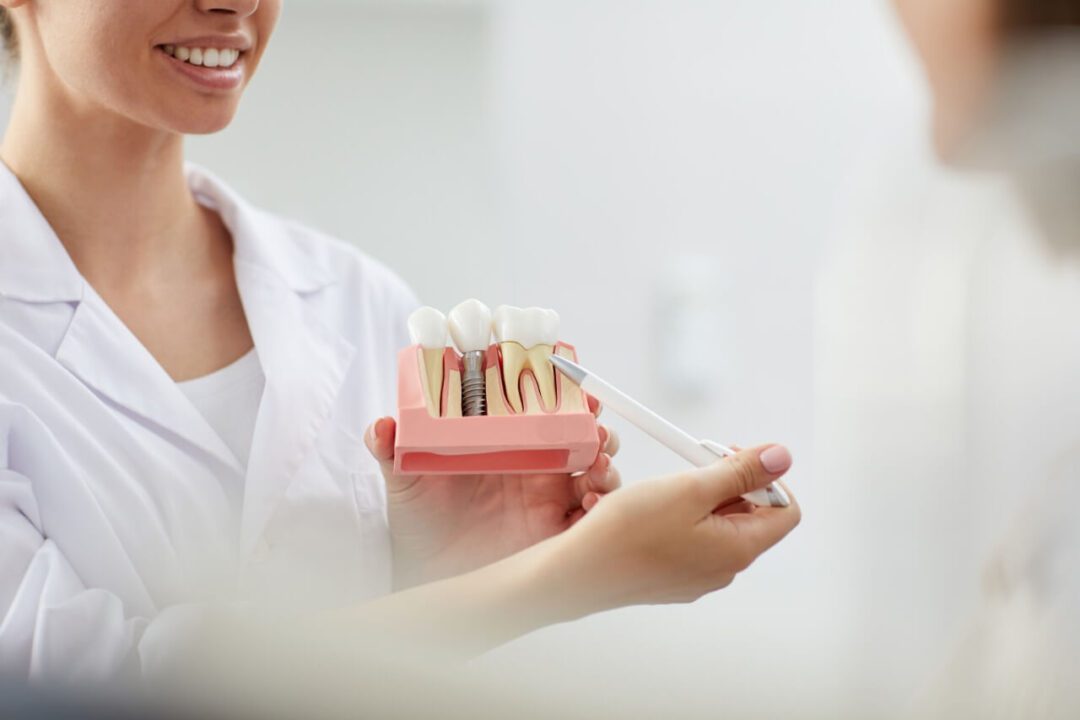
A dental implant is a surgical procedure aimed at replacing damaged or missing tooth roots with metal, screw-like posts (usually Titanium), which are surgically placed into the jawbone. These artificial roots provide a solid foundation for mounting replacement teeth (crowns) onto them.
Why are they the best? Simply because they completely mimic a natural tooth. Unlike removable dentures or fixed bridges that may affect adjacent teeth, the implant fuses with the jawbone (a process called Osseointegration), providing unmatched stability and preserving the jawbone from atrophy.
Advantages and Disadvantages of Dental Implants
Before making a decision, it is essential to understand all the positive and negative aspects.
Advantages of Dental Implants
- Full Function Restoration: The ability to chew and speak completely normally, as if they were your real teeth.
- Natural Appearance: The crowns are designed to look identical to your natural teeth in color and shape.
- Permanent Solution: With proper care, implants can last a lifetime.
- Preservation of Jawbone: Tooth loss leads to bone atrophy in its place. The implant stimulates the bone and maintains its mass.
- Preservation of Adjacent Teeth: Dental implants do not require grinding down or weakening healthy adjacent teeth, as is the case with traditional bridges.
- Improved Self-Confidence: Restoring a full smile has an enormous positive psychological impact.
Disadvantages and Challenges of Dental Implants
Cost: The initial cost may be higher than other alternatives (though it is more cost-effective in the long run).
Time: The process requires time (from 3 to 6 months) to allow for osseointegration before placing the final crown (except for immediate implants).
Surgical Procedure: Like any surgery, it involves risks (albeit rare) such as infection or nerve damage.
Need for Sufficient Bone: It requires adequate bone density in the jaw, and some patients may need a bone graft first.
Detailed Comparison: Dental Implants vs. Bridges and Dentures
This question is a point of confusion for many. Here is a clear comparison:
Cost (Initial vs. Long-Term)
Dentures: They are the least expensive as an initial payment.
Bridges: Their cost is moderate.
Dental Implants: They have the highest initial cost.
The Result: In the long run, implants are the most cost-effective. Bridges may need replacement every 7-10 years, and dentures may need relining or replacement. The implant itself lasts a lifetime, eliminating future replacement costs.
Impact on Adjacent Teeth and Bone
Dentures: They rest on the gums, which accelerates jawbone atrophy underneath them, making them unstable over time.
Bridges: They require grinding (prepping) the healthy teeth next to the missing tooth to anchor the bridge. This weakens these teeth and exposes them to future decay.
Dental Implants: They do not affect adjacent teeth at all. Most importantly, they are the only procedure that integrates with and stimulates the bone, preventing its atrophy and preserving the jaw’s shape.
Comfort and Lifespan
Dentures: Often uncomfortable, causing difficulty in speaking and chewing certain foods, and they can move.
Bridges: They are fixed and comfortable, but still a foreign body connected to other teeth.
Dental Implants: They provide the highest level of comfort and stability. You feel and use them exactly like a natural tooth. They are undisputedly the closest solution to nature.
Who is the Ideal Candidate for Dental Implants? (Implant Conditions)
Not everyone is an ideal candidate for implants. Several conditions for dental implants must be met to ensure the highest success rates:
Good General Health: The patient must be in good health to undergo minor surgery and recover from it.
Oral and Gum Health: The gums must be healthy and free of inflammation.
Bone Density: There must be sufficient bone in the jaw to support the implant. This is the most critical factor.
Non-Smoking (Strongly Preferred): Smoking significantly hinders the healing and osseointegration process and increases the implant failure rate.
Commitment to Hygiene: The patient must be committed to oral hygiene and regular dental visits.
Unsuitable Patients: Implants may not be suitable for patients with uncontrolled diabetes, those receiving radiation therapy in the head and neck area, or those with advanced osteoporosis taking certain medications.
Types of Dental Implants in Egypt (By Material and Country)
When searching for types of dental implants, you will find different classifications. The most famous and widely used in Egypt are:
Classification by Material (Titanium and Zirconia)
Titanium Implants: This is the most common material used for decades. Titanium is characterized by its superior ability to fuse with human bone (biocompatible) and its extreme durability.
Zirconia Implants: A newer alternative, it is a very strong ceramic material. It is characterized by its white color, making it an excellent cosmetic choice for people with very thin gums through which the dark color of titanium might show.
Classification by Country of Origin (German, Italian, Swiss, Korean)
You will also hear classifications by country of origin, which differ in quality and price:
German Dental Implants: Known for their very high quality and precision manufacturing (like Straumann). They are considered among the most expensive.
Swiss Dental Implants: Similar to German implants in quality and global reputation, considered premium options.
Italian Dental Implants: Famous for innovation and high quality, they are considered an excellent European option that combines durability with competitive cost.
Korean Dental Implants: Have gained an excellent reputation in recent years as a “value for money” option, offering very good quality at a moderate and competitive price.
Dr. Mohamed Omara Center for Dental Implants and Cosmetics
Dental implants in Egypt
The best dentist
They are professors, with many years of experience in dentistry.
The best facilities
Accredited by the Egyptian Ministry of Health and ISO certified for global quality, our center represents the gold standard
reasonable price
Omara Dental Center always strives to provide the best service at an affordable price; It offers all services at the best prices. Less than any other country.
The Stages of Dental Implants in Detail
Traditional dental implants require several stages and a waiting period to ensure success:
Stage One: Diagnosis and Planning
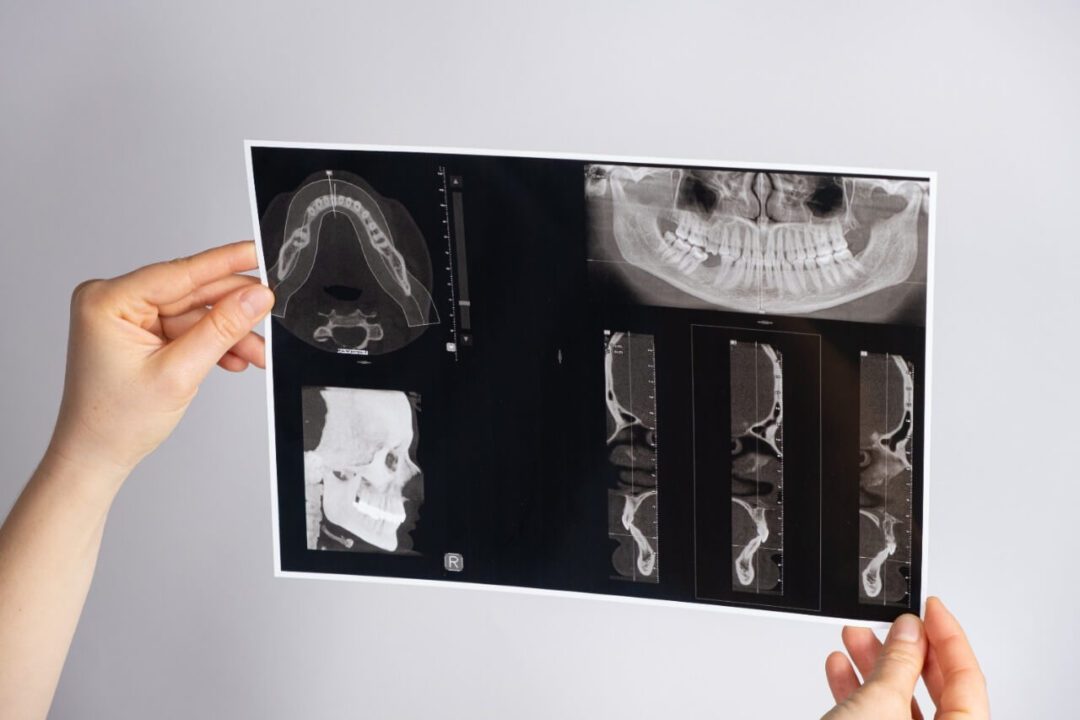
This is the most important stage. The dentist performs a comprehensive oral examination and takes X-rays (usually a 3D Cone Beam CT scan – CBCT) to accurately assess bone density and location, and to identify the position of nerves and sinuses. The complete treatment plan is developed at this stage.
Stage Two: Bone Grafting (If Necessary)
If the scans show that the jawbone is insufficient (too thin or short), a bone graft must be performed first. This involves adding a bone graft (artificial or natural) to stimulate bone growth in the area. This procedure requires a healing period (from 3 to 6 months) before placing the implant.
Stage Three: Implant Placement (Surgery)
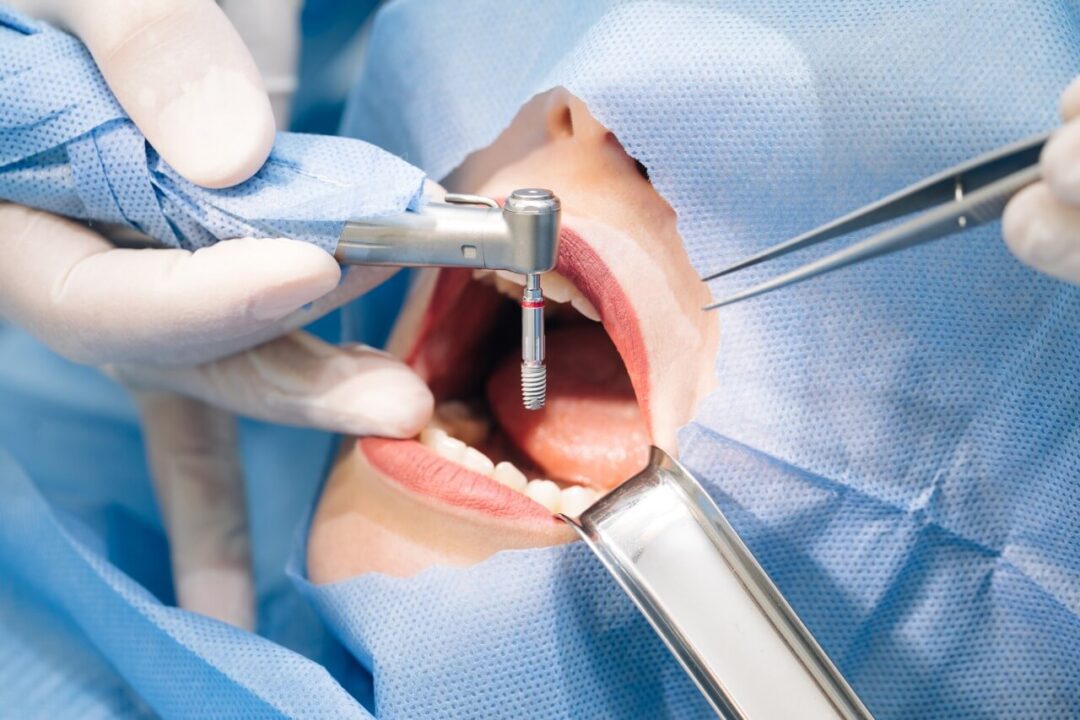
This stage is performed under local anesthesia. The dentist makes a small incision in the gum, prepares a space in the bone, and then places the titanium “screw” (the implant) into the bone. The gum is then closed over the implant.
Stage Four: Osseointegration (Healing Period)
This is the waiting period. The implant is left in the bone to begin the “Osseointegration” process, where the surrounding bone fuses with the implant, making it a fixed part of it. This period typically takes 3 to 6 months, depending on the jaw’s condition (the lower jaw is faster than the upper).
Stage Five: Abutment Placement
After confirming osseointegration, a simple procedure (under local anesthesia) is performed to expose the implant and attach the “Abutment” to it. This abutment is the piece that connects the implant (inside the bone) to the crown (above the gum).
Stage Six: Placing the Final Crown
Approximately two weeks after placing the abutment (to allow the gums to heal around it), precise impressions of the mouth are taken and sent to the lab to fabricate the final crown (the replacement tooth). The crown is permanently fixed onto the abutment, giving you a new tooth that functions and looks natural.
Dental implants are a permanent solution for replacing missing teeth and are used to replace one or more missing teeth. Place the implant in the lower jaw.
The bone grows around the implant, creating a natural connection between the gum tissue and the implant.
Immediate Dental Implants in Egypt: Is It Right for You?
Immediate dental implants in Egypt are a modern technique that allows for extracting the damaged tooth, placing the implant “screw,” and attaching a “temporary crown” in the same session.
Advantages: Leaving the clinic with a new tooth in one day, reducing the number of surgeries and the treatment period.
Disadvantages: Not suitable for all cases. It requires perfect conditions in terms of bone density and the absence of acute infection at the extraction site.
Who is it for? Mostly for visible front teeth that require a quick cosmetic solution, provided the bone condition is excellent.
Full-Jaw Implants (All-on-4 / All-on-6) as an Advanced Solution
This section is important for those who have lost most or all of their teeth.
What is the All-on-4 Technique?
It is a revolutionary technique aimed at replacing a full arch of teeth using only 4 implants (or 6 implants in the All-on-6 technique for more support). Two implants are placed vertically in the front, and two implants are placed at an angle in the back to make the most of the available bone and avoid sensitive areas (like nerves or sinuses).
Who is it for and What are its Advantages?
Who is it for: For people who have lost all their teeth in one arch (or both arches), or their remaining teeth are too damaged and need extraction.
Advantages:
Speed: A fixed, temporary set of teeth is often attached on the same day as the surgery.
Avoiding Complex Surgeries: The tilt of the posterior implants reduces the need for costly bone grafting.
Cost: Much less expensive than placing a separate implant for every missing tooth.
Immediate Results: Restoring the ability to smile and chew (lightly) in 24 hours.
Dental Implant Prices in Egypt
The cost of dental implants in Egypt is significantly low compared to European, Gulf, and American countries, while maintaining world-class quality. This has made Egypt a leading destination for dental tourism.
Factors Affecting the Cost
It is important to clarify that prices vary significantly based on:
Type of implant (German, Swiss, Italian, Korean, etc.).
The dentist’s experience and the center’s reputation.
The need for additional procedures (like bone grafting or sinus lifts).
The number of implants.
The type of final crown (Porcelain or Zirconia).
Average Dental Implant Prices in Egypt (Estimate)
Price of a single dental implant: Generally ranges between 7,000 to 25,000 EGP (approximately $148 to $530 USD) depending on the implant type.
Cost of a full-jaw implant (All-on-4 / All-on-6): Starts from about 75,000 EGP and goes up to 210,000 EGP per jaw (approximately $1,580 to $4,430 USD).
Warning: Beware of extremely cheap offers. Low-quality implants or an inexperienced dentist can lead to implant failure and serious health problems.
How to Choose the Best Dental Implant Centers in Egypt?
Choosing the center or dentist is the most critical decision in your treatment journey. Do not rely on price alone.
The Right Selection Criteria
Doctor’s Experience and Qualifications: Look for a doctor specialized in oral surgery and implantology, preferably one with specialized postgraduate degrees.
Technology Used: Modern centers use CBCT scans and digital implant planning for precision and safety.
Sterilization: Ensure the center follows the highest international sterilization standards (having certifications like ISO can be an excellent indicator).
Types of Implants: A good center provides various options from globally reputable implant brands.
Transparency: The doctor should provide you with a clear and detailed treatment plan with costs before starting.
Case-studies: Ask to see before-and-after photos of similar cases performed by the doctor.
Special Recommendation: Why is Dr. Mohamed Omara’s Center One of the Best Options?
When searching for the best dental implant doctor in Egypt, the name Dr. Mohamed Omara and his team stand out. Dr. Omara’s center is classified as one of the best in Egypt for several fundamental reasons that guarantee the patient the highest levels of quality and safety:
High-End Scientific Qualifications: Dr. Mohamed Omara holds a Master’s in Orthodontics and Cosmetic Dentistry from the University of Parma, Italy, which ensures his knowledge of the latest European techniques and treatment protocols.
Academic Medical Team: The center is distinguished by a high-level academic medical team, including a selection of lecturers and professors from Egypt’s top universities, ensuring the application of the highest medical and academic standards in treatment.
Global Quality Certification: The center holds the ISO Global Quality Certification, an international recognition of its application of the highest administrative and medical quality standards, especially in sterilization and patient safety.
Direct Medical Supervision: Unlike some large centers, Dr. Mohamed Omara personally supervises all cases, ensuring the treatment plan is executed with the highest possible precision and providing personal follow-up for every patient.
This combination of international academic qualification, a university-level medical team, commitment to global quality standards, and direct personal supervision places Dr. Mohamed Omara’s center as an extremely reliable choice for those seeking the best in dental implants in Egypt.
Medical Tourism for Dental Implants in Egypt: Why is it the Best?
Egypt has become a leading destination for dental medical tourism, competing with major countries. This distinction did not come from nowhere; it is based on several unique strengths:
Competitive Cost: Global Quality at Local Prices
The most prominent factor is the massive cost difference. A patient coming from Europe, the Gulf, or America can receive the same quality of service (and sometimes better) at a cost 50% to 70% lower than the price in their home country. This includes using the same global implant brands (German, Swiss, and Italian) but at a much lower overall cost.
Doctors’ Experience and International Qualifications
Egyptian dentists have an excellent reputation for practical skill. More importantly, many of them, like Dr. Mohamed Omara, hold postgraduate degrees from prestigious European universities (like the University of Parma, Italy). This ensures the patient receives treatment based on the latest international protocols and research.
Latest Technologies and Quality Standards (ISO)
Centers in Egypt no longer rely on manual skill alone. Major centers (like Dr. Omara’s centers) are equipped with the latest technology:
3D Cone Beam (CBCT) for precise planning.
Digital Smile Design.
International Sterilization Standards (ISO) which ensure the highest levels of safety and infection prevention.
Quick Comparison: Egypt vs. Other Destinations (like Turkey and Hungary)
Egypt: Stands out for its unmatched therapeutic and touristic value. In addition to the low cost and high medical quality (backed by European qualifications), the patient gets a unique historical tourism experience (Pyramids, Nile, museums) that cannot be rivaled.
Turkey: A very strong competitor in the cost factor and all-inclusive packages (sometimes including accommodation and flights), but the tourist attraction factor is concentrated in specific places.
Hungary (or Eastern European countries): Was the traditional destination for Europeans (especially Germans and Brits) for quality service, but its cost remains relatively higher than in Egypt and Turkey.
Conclusion: Egypt succeeds in offering the “golden equation”: European medical quality, at a very competitive cost, combined with the richest tourism experience in the world.
Post-Dental Implant Surgery Instructions (The Complete Care Guide)
The success of the implant depends heavily on your commitment in the first few days.
Eating and Drinking After Surgery
First 24 Hours: Consume cold drinks and very soft foods (yogurt, ice cream, juices). Avoid hot drinks completely as they can cause bleeding.
First Week: Continue with a soft food diet. Avoid hard foods (nuts, chips) or those that require vigorous chewing.
Avoid Chewing: Try to chew on the other side of your mouth, away from the implant site.
Oral Hygiene and Wound Care
First 24 Hours: No vigorous rinsing, spitting, or brushing near the surgical site.
After 24 Hours: Start rinsing gently with a warm saline solution (half a teaspoon of salt in a cup of warm water) 3-4 times a day, especially after eating.
Brushing: Brush the rest of your teeth as usual, but avoid touching the surgery area with the brush for the first few days.
Managing Swelling and Pain
Swelling: It is normal and peaks after 48-72 hours. Use ice packs on the outside of the cheek (20 minutes on, 20 minutes off) during the first 24 hours to reduce it.
Pain: The doctor will prescribe painkillers and an antibiotic. Adhere to them strictly. The pain is usually mild and manageable.
Rest: Avoid strenuous physical activity or sports for 3-4 days.
Potential Complications and Risks (And How to Avoid Them)
While the success rate of dental implants is over 97%, it is important to be transparent about the rare risks.
Rare Risks (Integration Failure, Infection)
Osseointegration Failure: This is the most significant risk. It occurs when the bone fails to fuse with the implant. The number one cause is smoking, followed by non-compliance with instructions or poor bone density.
Infection: Very rare if the procedure is done in a center that applies strict sterilization standards (like ISO-certified centers).
Nerve Damage: A very rare risk that causes numbness in the lip or chin. It is almost completely avoidable with careful planning using 3D CBCT scans.
Sinus Problems: May only occur in upper molar implants if the implant is very close to the sinuses. An expert dentist knows how to avoid this or treat it immediately.
The Role of the Professional Doctor in Avoiding Risks
This is where the difference lies. An expert doctor (like Dr. Mohamed Omara) uses digital planning and 3D scans to determine the implant’s position with millimeter precision, avoiding nerves and sinuses. Applying global sterilization standards (ISO) prevents infection, and providing clear instructions to the patient ensures the best conditions for healing and osseointegration.
Frequently Asked Questions (FAQ) About Dental Implants
No. The surgery itself is done under local anesthesia, so you feel no pain. The post-operative pain is mild, very manageable, and controlled with painkillers.
The success rate of dental implants is over 97% in the long term, especially when performed by an expert doctor and with patient compliance.
The implant itself (the metal screw) is designed to last a lifetime. The outer crown may need replacement every 10-15 years depending on its care, just like natural teeth.
The human body does not “reject” titanium (as it is an inert material). Failure (which is rare) usually occurs due to infection, smoking, or insufficient osseointegration, not due to an “immune rejection.”
This is a common marketing term. Lasers may be used to make the incision in the gum instead of a scalpel, but they are not used to drill the bone or place the implant. The primary reliance is on 3D scans and surgical guides for accuracy.
Conclusion: Your Investment in a Permanent Smile
Dental implants in Egypt are no longer just a cosmetic procedure; they are a long-term health investment that restores your chewing function, preserves your jaw health, and boosts your self-confidence. By choosing a trusted medical center, an expert doctor, and following the instructions, you are guaranteeing yourself a natural, healthy smile that will last for many years.